EN

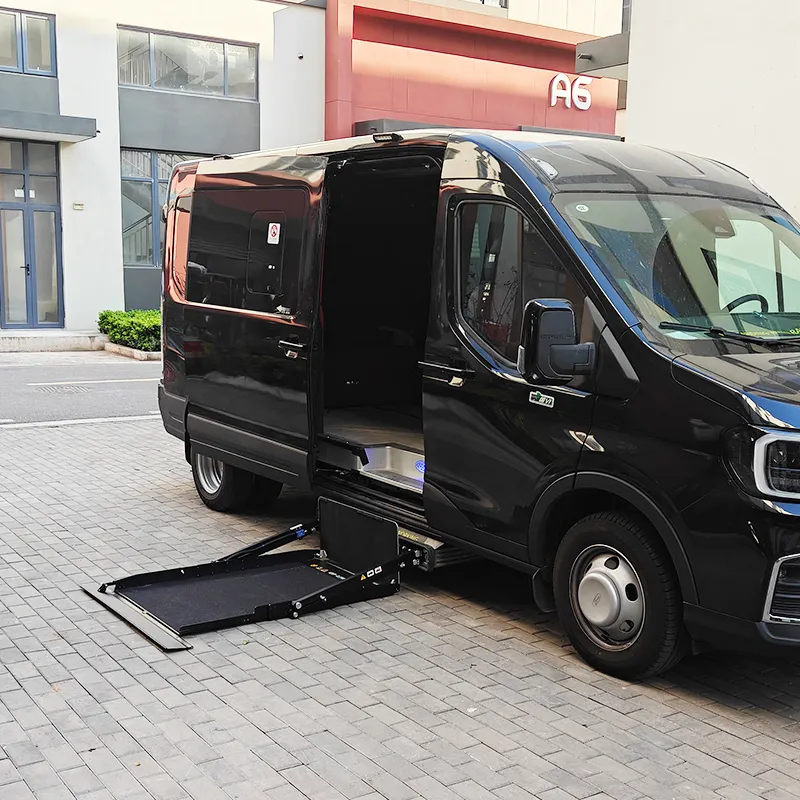
Dynamic Crash Dynamics and Securement Protocols for Wheelchair Accessible Vehicles
When configuring a wheelchair accessible vehicle, relying on standard factory-installed seatbelts or non-rated mobility equipment introduces catastrophic biomechanical risks during a collision. In a standard vehicle, OEM seats, integrated lap-and-shoulder belts, and chassis load paths are factory-engineered to absorb impact energy. Conversely, an unmodified wheelchair functions primarily as a mobility device rather than a vehicle seat. In a 30-mph collision, an uncertified setup subjects the occupant to extreme tipping forces, severe shoulder-belt misalignment, abdominal submarining, and structural frame failure.
To mitigate these fatal dynamic failure modes, modern paratransit operators, school bus fleets, and commercial conversion specifiers must adopt integrated crash-tested standards—specifically the RESNA WC19 framework paired with automated securement technology inside a certified wheelchair accessible vehicle.
Biomechanical Failure Modes in Non-Compliant Vehicle Securement
In a frontal collision, the kinetic energy transferred to a seated occupant is directly dictated by seat anchorage, center of gravity, and belt restraint geometry. Standard wheelchairs elevate the passenger's center of gravity compared to standard automotive seating. During rapid deceleration, this high center of mass creates an enormous forward tipping moment.
When securing a non-crash-tested mobility device in a wheelchair accessible vehicle, three primary structural breakdowns occur:
-
Submarining and Visceral Trauma: Without rigid, engineered pelvic restraint anchor points, conventional lap belts ride up over the iliac crests into the soft abdominal cavity. Under dynamic crash loading, the passenger slides downward and forward beneath the belt, transferring massive kinetic forces directly into internal organs and the lumbar spine.
-
Structural Collapse and Frame Disintegration: A mobility chair not built to WC19 standards lacks the reinforced tubular steel or aluminum alloy framing required to withstand a 20-g deceleration pulse. The frame often crumples, shearing welded joints and detaching from floor-mounted tiedowns. Once detached, the chair itself becomes a heavy projectile within the cabin.
-
Severe Head Excursion and Intrusive Whiplash: Standard wheelchairs feature non-rigid backrests, push handles, and rear wheel assemblies that offer zero energy dissipation. In a crash pulse, the backrest can collapse or intrude forward, while the unrestrained head travels forward at high speed, resulting in fatal basal skull fractures or hyper-extension spine injuries.
Rigorous crash data analysis from the University of Michigan Transportation Research Institute (UMTRI) emphasizes these severe failure modes, proving that wheelchair users in uncertified setups face up to 45 times higher risk of serious injury compared to ambulatory occupants using standard OEM safety belts.
The WC19 Standard: Engineering Integrated Occupant Protection
The RESNA WC19 standard establishes a comprehensive voluntary protocol for dynamic crashworthiness. A certified WC19 mobility chair is explicitly designed, tested, and rated to function as a forward-facing vehicle seat within a wheelchair accessible vehicle.
Integrated Load Path Architecture
-
Vehicle Floor Chassis: Connects directly to the 4-point strap or AWTORS docking pin.
-
WC19 Certified Frame: Directs impact forces through integrated heavy-duty anchor points.
-
Pelvic & Shoulder Restraint: Maintains anatomical load distribution across the iliac crests and sternum.
Dynamic Sled Testing Parameters
To earn WC19 certification, a mobility device must undergo rigorous dynamic sled testing simulating a severe 30-mph (48 km/h) frontal impact with a 20-g deceleration pulse:
-
Structural Integrity: The frame, seat pan, and folding mechanisms must maintain structural continuity without fracturing or releasing the occupant dummy.
-
Anchor Point Compliance: The chair must incorporate four easily accessible, clearly marked structural securement points capable of withstanding strap forces exceeding 2,500 lbs per point.
-
Clearance and Geometry: Integrated pelvic restraints must attach directly to the chair frame at specific geometric angles (typically 45 degrees to 75 degrees relative to the horizontal plane) to prevent belt slippage and optimize pelvic engagement.
NHTSA crash investigations demonstrate that utilizing a WC19-compliant chair alongside a properly positioned three-point restraint system inside a certified wheelchair accessible vehicle reduces moderate-to-critical crash injuries by up to 76%.
Automated Tiedowns (AWTORS) vs. Manual Securement
While manual four-point strap-type tiedowns meet baseline transport standards, their safety effectiveness is heavily constrained by human error. Over-tightened straps deform the chair frame, while loose straps permit excessive forward excursion during braking or impact.
| Securement Parameter | Manual 4-Point Strap Systems | Automated Pin Docking (AWTORS) |
|---|---|---|
| Engagement Mechanism | Manual ratcheting, variable tension | Mechanical jaw locking onto pin |
| Loading Cycle Time | 3 to 5 minutes per passenger | Under 15 seconds (push-button) |
| Driver Error Vulnerability | High (improper angles, slack straps) | Minimal (binary locked status) |
| Dynamic Excursion Control | Moderate (subject to strap stretch) | Superior (rigid mechanical link) |
Automated Tiedown and Occupant Restraint Systems (AWTORS) resolve loading inconsistencies in every commercial wheelchair accessible vehicle. By utilizing a heavy-duty floor-mounted docking station that mechanically engages a steel pin mounted to the WC19 frame, AWTORS establishes a rigid, repeatable connection directly to the vehicle chassis.
Eliminating operator variability ensures that crash energy flows through pre-engineered load paths rather than unverified structural points on the chair, safeguarding passengers across every trip.
Regulatory Compliance Framework for Fleet Operators
Fleet procurement managers and conversion specialists operating paratransit services, non-emergency medical transportation (NEMT), or accessible school buses must navigate a multi-tiered regulatory landscape to ensure full vehicle compliance:
-
RESNA WC19 / ISO 7176-19: Dynamic frontal impact performance standards for wheelchairs used as seats in motor vehicles.
-
FMVSS No. 222: Federal Motor Vehicle Safety Standards governing school bus seating, securement zones, and structural integrity requirements for a commercial wheelchair accessible vehicle.
-
ADA Title III Compliance: Federal guidelines mandating minimum clear floor space, ramp slopes, entry door heights, and securement system deployment in public and private transit fleets.
For specialized vehicle conversions, equipment buyers should verify compliance through accredited third-party audit programs, such as the NMEDA (National Mobility Equipment Dealers Association) Quality Assurance Program, ensuring that modified chassis structures meet strict dynamic testing mandates.
Securement Verification Checklist for Fleet Maintenance
To enforce rigid safety standards, fleet operators should implement this operational inspection protocol for every wheelchair accessible vehicle:
-
Verify WC19 Transit Symbols: Confirm the mobility device features permanent transit securement hooks stamped with the official WC19 compliance symbol.
-
Inspect Floor Anchor Tracks: Check L-track or docking station mounting bolts for corrosion, debris accumulation, or torque loss against chassis specifications.
-
Check Restraint Geometry: Ensure shoulder belts cross the center of the occupant's collarbone without resting against the neck, and pelvic belts rest firmly across the lower hip bones.
-
Test Mechanical Lock Mechanisms: Validate that AWTORS pin-docking systems deliver audio/visual confirmation of full engagement before initiating vehicle transit.
By implementing certified WC19 equipment, automated docking technology, and safety-first engineering in every wheelchair accessible vehicle, transit providers eliminate preventable risk, comply with federal safety mandates, and protect passengers with uncompromising structural safety. Explore advanced conversion hardware, ramps, and automated securement solutions at
Table of Contents
- Dynamic Crash Dynamics and Securement Protocols for Wheelchair Accessible Vehicles
- Biomechanical Failure Modes in Non-Compliant Vehicle Securement
- The WC19 Standard: Engineering Integrated Occupant Protection
- Automated Tiedowns (AWTORS) vs. Manual Securement
- Regulatory Compliance Framework for Fleet Operators
- Securement Verification Checklist for Fleet Maintenance