EN
EN

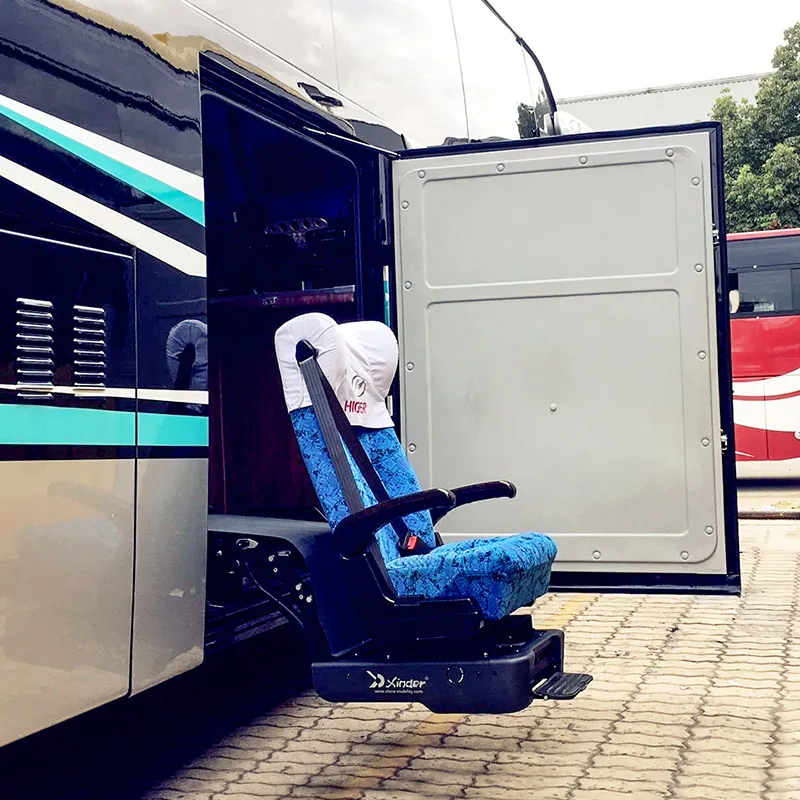
Crash-Tested Structural Integrity and Mechanical Locking Reliability
FMVSS 207 Certification: Dynamic Load Performance Beyond Static Bench Testing
Real safety can't be confirmed without testing under conditions similar to actual crashes. Federal Motor Vehicle Safety Standard 207 requires special load testing that mimics what happens in real collisions. This test specifically looks at how well swivel seats hold up against those intense 20G impacts when they're rotating. Regular bench tests just check if seats can handle weight straight down, but FMVSS 207 is different. They actually use big hydraulic rams to push on the seats with around 3,000 pounds of force from all directions while watching closely how much the materials bend and twist. What this shows are problems with the locking systems that normal weight tests simply don't catch. When a seat passes these rigorous FMVSS 207 requirements, it means the structure stays intact even when hit with crash-like forces no matter which way it's turned.
Finite Element Analysis (FEA) Optimization for Rotational Stress Points
FEA works by creating digital models that show how stress spreads through pivot parts, helping spot areas where rotation forces build up during impacts. When engineers run these simulations for thousands of possible crash situations, they can tweak things like how thick materials are, what alloys to use, and how loads move around the bearing area of the swivel mechanism. This helps stop those tiny cracks from forming that might eventually lead to complete joint breakdown. Good FEA work cuts down on pivot deformation by roughly 40% when compared with regular designs, which means better mechanical locks hold up much better when things get shaken around or stressed out in real world conditions.
Global Regulatory Compliance and Transparent Third-Party Verification
R14/R16/R17 vs. FMVSS 207: How Rotation-Specific Requirements Differ Across Markets
The UNECE rules covering R14, R16 and R17 require dynamic crash tests for swivel seats, specifically looking at how they hold up when rotated under impact forces. This kind of testing isn't part of the FMVSS 207 standards here in the US which only checks for basic static strength. European regulations actually simulate real world scenarios like 30 km/h side impacts and track how much the seat deforms while rotating. Meanwhile American tests just check if seats can handle vertical loads. Because of this difference, a swivel seat that passes our own FMVSS 207 tests might still pose safety risks in real accidents. Recent Euro NCAP sled tests from 2023 back this up, finding that seats without proper R17 certification had about 38% more movement of occupants during collisions compared to compliant models.
Why Only 12% of Swivel Seats Publish Verified Crash Data — and What to Demand
Just 12% of manufacturers publish third-party verified crash data, often omitting rotation-specific metrics like locking mechanism failure rates during oblique impacts. Demand these four verifications before purchase:
- Independent lab validation of UNECE R16.07 rotational stability reports,
- High-speed video documentation of seatbelt anchorage integrity during full 360° rotation,
- FEA-based stress distribution maps captured at 15° rotational increments, and
- Certification confirming child restraint systems remain fully accessible and functionally secure post-swivel.
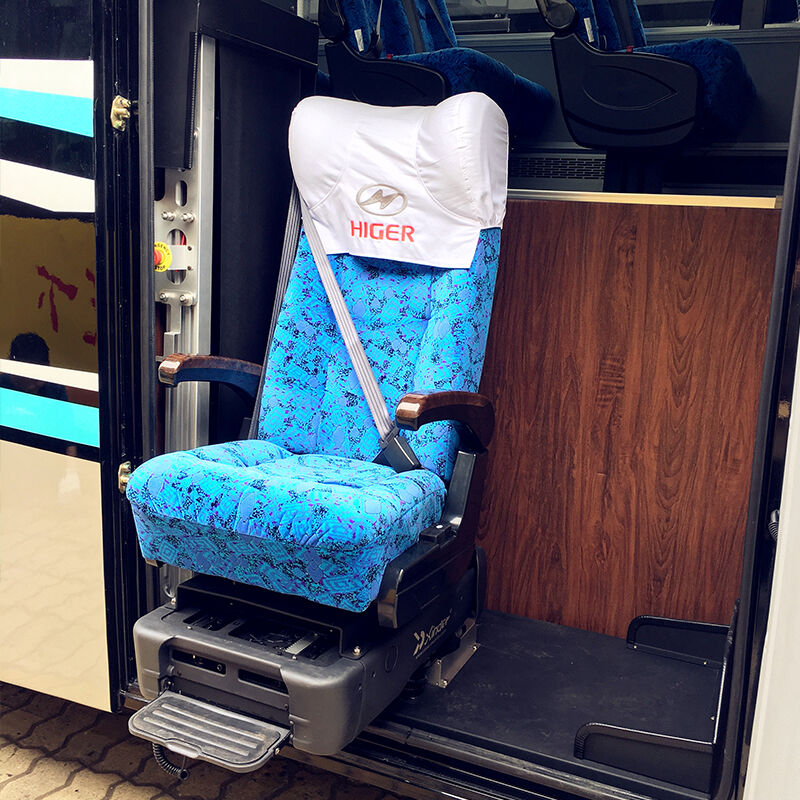
Smart Integrated Safety Systems for Real-World Swivel Seat Use
Pre-Pretension Seatbelts That Engage Before Full Swivel Completion
The best swivel seats need restraint systems that work ahead of time rather than waiting until something happens. These pre-pretension belts start pulling tight about three tenths of a second before the swivel finishes moving, which cuts down on any loose slack when transitioning between positions. Gyro sensors inside these systems actually read how people move around, then apply just the right amount of pressure somewhere between 600 and 800 Newtons as they turn. This helps stop things like submarining or neck injuries from happening should there be a collision while someone is still rotating. According to some real world testing published last year by SAE standards group, we're seeing roughly a third fewer spine injuries overall with these active systems versus older passive ones. Safety conscious folks should always check whether their seat has those mechanical locks built in too, since these prevent actual rotation from starting unless the belt is properly fastened first.
AEB and Restraint State Coordination: Preventing Unsafe Rotation During Emergency Braking
Automatic Emergency Braking (AEB) systems must communicate bidirectionally with swivel mechanisms. When AEB detects imminent collision risk, it signals the seat controller to:
- Immediately halt rotation,
- Lock the baseplate at Ç15° deflection, and
- Tighten seatbelts to 1500N within 0.15 seconds.
This coordination prioritizes crash posture over user-initiated movement—disabling swivel commands when sensors detect emergency braking forces exceeding 0.7g. Independent testing reveals uncoordinated systems increase thoracic injury risk by 41% in frontal impacts (IIHS 2023). Always confirm CAN bus integration with the vehicle’s broader safety network before installation.