EN

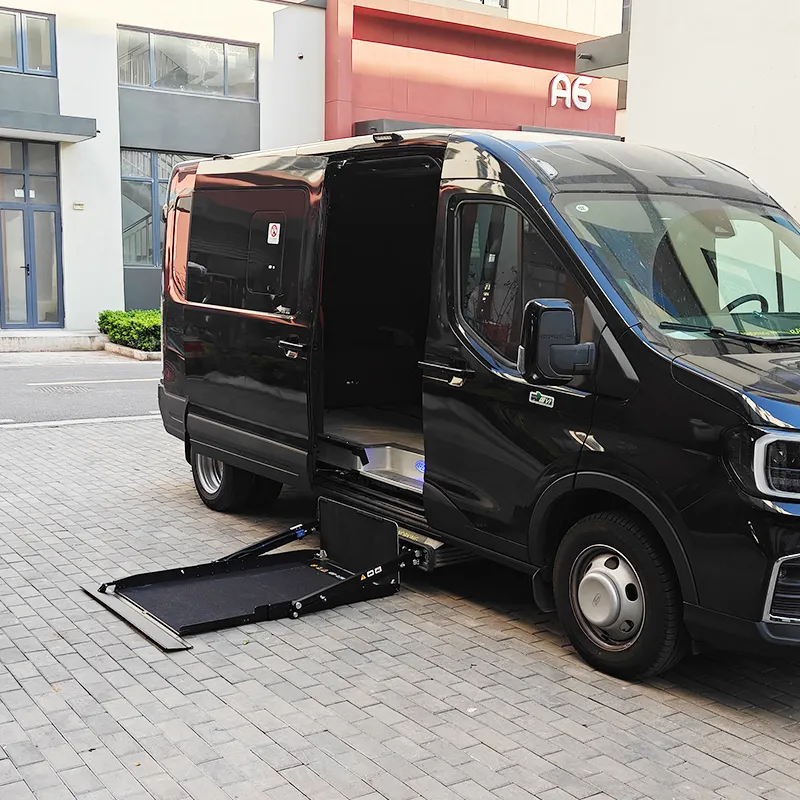
Selecting or engineering a commercial wheelchair accessible van requires moving beyond basic convenience adaptations to evaluate structural crashworthiness and dynamic stability. Modifying a factory passenger chassis to create a wheelchair accessible van involves cutting original floor pans, altering primary load paths, and adding specialized access equipment.
Without rigorous physical validation, an uncertified wheelchair accessible van faces chassis deformation, belt slippage, or cabin intrusion during sudden deceleration. A fully compliant wheelchair accessible van must seamlessly integrate lowered-floor engineering, certified entry ramps or lifts, and dynamic occupant restraints into a unified safety architecture.
For a complete overview of vehicle accessibility hardware and commercial conversion standards, consult our comprehensive
Ramps, Lifts, and Lowered Floors for Low-Effort Access
The entry system of a wheelchair accessible van serves as the primary structural boundary between the curb and the vehicle cabin. Professional conversions reinforce the chassis after executing floor modifications, ensuring the lowered floor of the wheelchair accessible van maintains original structural stiffness and crash energy absorption.
Commercial conversion options for a wheelchair accessible van include three core access technologies:
-
Lowered Floor Architecture: Dropping the center or full floor channel by 11 to 14.5 inches inside a wheelchair accessible van increases interior door clearance, improves sightlines, and lowers the vehicle center of gravity.
-
Automated In-Floor and Fold-Out Ramps: Heavy-duty power ramps deployed from a wheelchair accessible van extend in under 15 seconds, incorporating anti-slip surfaces and emergency manual release levers for reliable all-weather operation.
-
Under-Floor Cassette Lifts: Hydraulic or electric wheelchair lifts installed on a wheelchair accessible van feature dual handrails, anti-slip aluminum platforms, and mechanical roll stops to eliminate manual lifting hazards.
Under Federal Motor Vehicle Safety Standards (FMVSS), builders certifying a wheelchair accessible van must validate compliance using physical crash barrier testing or dynamic finite element analysis (FEA).
Advanced Wheelchair Securement and Occupant Restraint Protocols
Securing a wheelchair inside a wheelchair accessible van requires an integrated system that anchors both the mobility chair and the seated passenger directly to the vehicle chassis. Two-point clamps allow chair rotation during evasive turns, raising ejection risks inside a wheelchair accessible van.
| Securement Parameter | Manual 4-Point Strap Systems | Automated Electric Docking Systems |
| Primary Mechanism | High-tensile webbing straps with ratchets | Heavy-duty steel locking jaw engaging frame pin |
| Operation Mode in Van | Manual attachment inside the wheelchair accessible van | Push-button automatic lock inside the wheelchair accessible van |
| Crash Test Benchmark | 48 km/h (30 mph) / 20g dynamic sled test | 48 km/h (30 mph) / 20g dynamic sled test |
| Driver Effort Level | Requires physical bending and manual ratcheting | Zero manual effort; instant visual lock indicator |
A crash-tested wheelchair accessible van employs a four-point tie-down configuration or an automated docking station paired with an independent lap-and-shoulder belt. Anchoring occupant restraints directly to the floor pan of the wheelchair accessible van—rather than the wheelchair frame—prevents abdominal submarining during a 48 km/h (20g deceleration) impact pulse. For additional technical details on dynamic securement protocols, read our guide on
Mobility Independence: Restoring Autonomy Through Self-Directed Travel
Operating a certified wheelchair accessible van provides daily independence by eliminating reliance on fixed paratransit schedules or delayed rideshare services.
-
Eliminating Transit Delays: Owning a wheelchair accessible van removes long pickup wait times and rigid 24-hour advance booking mandates.
-
Fostering Social and Community Inclusion: A reliable wheelchair accessible van allows individuals to attend workplace commitments, family gatherings, and community events without transport friction.
-
Reducing Daily Physical Strain: Power ramps, automated doors, and electric docking stations inside a wheelchair accessible van enable independent boarding and securement. To explore the broader quality-of-life benefits, view our report on
Benefits of Owning a Wheelchair Van
Smart Customization Features for Every Wheelchair Accessible Van
Tailoring a wheelchair accessible van involves integrating adaptive seating, driving aids, and suspension hardware to match individual operational needs.
-
Powered Swivel Transfer Seats: Swivel seat bases rotate outside the wheelchair accessible van door frame and lower toward the curb, facilitating safe transfers from a wheelchair into factory seating.
-
Kneeling Suspension Systems: Electronic air or hydraulic kneeling systems lower the rear axle of the wheelchair accessible van, reducing the ramp slope for easier entry.
-
Adaptive Driving Hand Controls: Integrating electronic push-pull hand controls, steering spinner knobs, and left-foot accelerators allows individuals with lower-limb impairments to drive the wheelchair accessible van safely. Learn more about driver adaptations in our technical review on
Innovative Driving Aids for Disabled Drivers
Operational Inspection Checklist for Wheelchair Accessible Vans
Fleet operators, caregivers, and private owners managing a wheelchair accessible van should perform this standard safety check before transit:
-
Verify Ramp and Lift Operations: Run a full deployment cycle on the wheelchair accessible van power ramp or lift to confirm smooth movement and limit-switch engagement.
-
Inspect Floor Track Hardware: Check that floor L-tracks inside the wheelchair accessible van are free of dirt, debris, or mechanical distortion.
-
Validate Restraint Belt Tension: Ensure four-point webbing straps or electric docking latches inside the wheelchair accessible van lock firmly onto structural wheelchair frame members.
Building a compliant wheelchair accessible van requires adherence to international crash standards, dynamic sled validation, and hardware manufacturing quality. Explore our full line of OEM-grade wheelchair lifts, ramps, swivel seats, and securement hardware for every wheelchair accessible van at
Table of Contents
- Ramps, Lifts, and Lowered Floors for Low-Effort Access
- Advanced Wheelchair Securement and Occupant Restraint Protocols
- Mobility Independence: Restoring Autonomy Through Self-Directed Travel
- Smart Customization Features for Every Wheelchair Accessible Van
- Operational Inspection Checklist for Wheelchair Accessible Vans