EN
EN

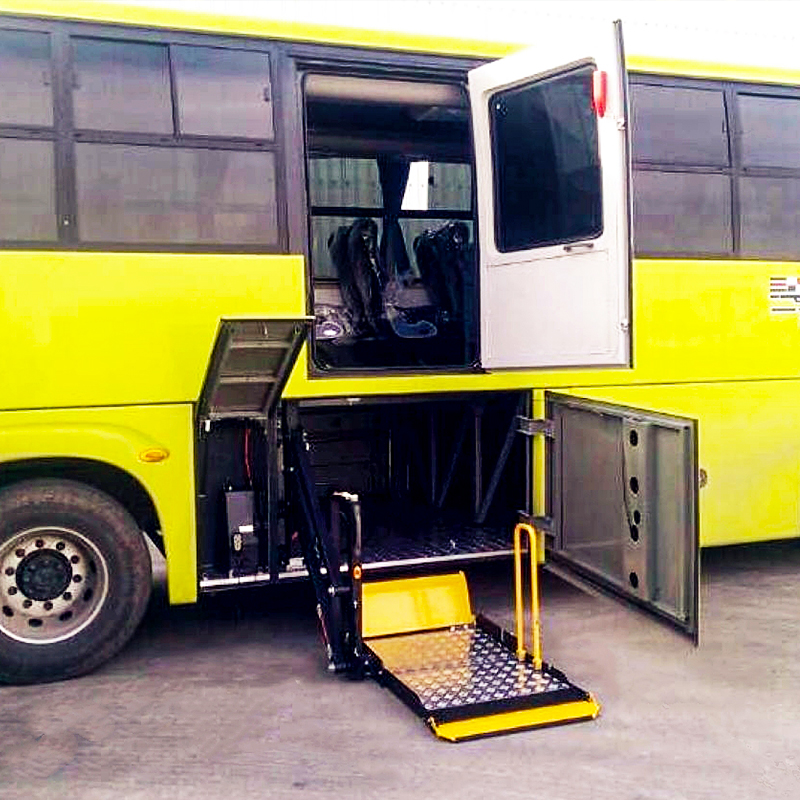
Regulatory Compliance: The Non-Negotiable Baseline for Accessible Vehicle Safety
ADA and 49 CFR Part 37: Ensuring Minimum Accessibility and Safety Standards
The Americans with Disabilities Act (ADA) and Department of Transportation regulation 49 CFR Part 37 establish mandatory accessibility and crash-safety requirements for modified accessible vehicles. These standards mandate securement points, slip-resistant ramps, and sufficient interior maneuvering space. Critically, Part 37 requires that all modifications—including lowered floors and ramp installations—preserve the vehicle’s original structural integrity through engineering validation. This safeguard prevents degradation of crumple zones and rollover protection, directly addressing the 42% of wheelchair-user injuries tied to substandard conversions (Journal of Rehabilitation Research & Development, 2022). Uncertified vehicles carry a 300% higher injury risk in low-impact collisions (NHTSA, 2023), underscoring that compliance isn’t procedural—it’s foundational to survival.
NHTSA Oversight and FMVSS Requirements for Modified Accessible Vehicles
The National Highway Traffic Safety Administration (NHTSA) enforces Federal Motor Vehicle Safety Standards (FMVSS) that apply after modification—ensuring retrofitted vehicles meet the same safety thresholds as factory-built models. Key standards include:
- FMVSS #207: Seat integrity testing for all seating positions, including added wheelchair stations
- FMVSS #208: Airbag compatibility with integrated wheelchair restraints
- FMVSS #301: Fuel system integrity verification following structural alterations
- FMVSS #214: Side-impact resistance testing for wheelchair anchor points, validated to withstand 6,000 pounds of force—a threshold aligned with the fact that 74% of wheelchair-seated occupants rely exclusively on these systems for crash protection (SAE International, 2023)
Qualified mobility modifiers must recertify crashworthiness via dynamic testing—not just static inspection—to account for altered load paths and stress concentrations. Failure to comply triggers penalties up to $25,000 per vehicle and voids original equipment manufacturer (OEM) warranties.
Critical Certified Systems That Protect Wheelchair Users in Accessible Vehicles
Wheelchair Securement and Occupant Restraint Systems (FMVSS #209 & #213)
FMVSS #209 and #213 require crash-tested, four-point wheelchair securement systems anchored to reinforced vehicle floors—and occupant restraints (e.g., lap/shoulder belts) engineered to work in concert with those systems. These components are validated for wheelchairs weighing up to 600 lbs and tested under dynamic conditions simulating real-world deceleration forces. When properly installed and used, certified systems reduce secondary impact injuries by stabilizing both chair and occupant simultaneously. Non-compliant restraints increase injury risk by 75% during collisions (2024 Mobility Safety Data Report), primarily due to uncontrolled wheelchair movement and inadequate torso restraint.
Lifts, Ramps, and Emergency Egress Mechanisms (FMVSS #403)
FMVSS #403 governs the design, performance, and durability of boarding and evacuation systems. Certification ensures:
- Ramps with no steeper than a 1:4 slope and slip-resistant surfaces meeting ADA tactile guidelines
- Lifts rated for ≥600 lbs with a minimum 6:1 mechanical safety margin
- Dual-sided handrails and automatic roll-stop barriers ≥1.5 inches high
- High-contrast edge markings for users with low vision
These components undergo fatigue testing for 10,000+ deployment cycles and emergency egress verification under simulated power-loss conditions. Compliance prevents 42% of boarding-related incidents (2023 National Transit Database), transforming accessibility infrastructure from convenience into a life-safety system.
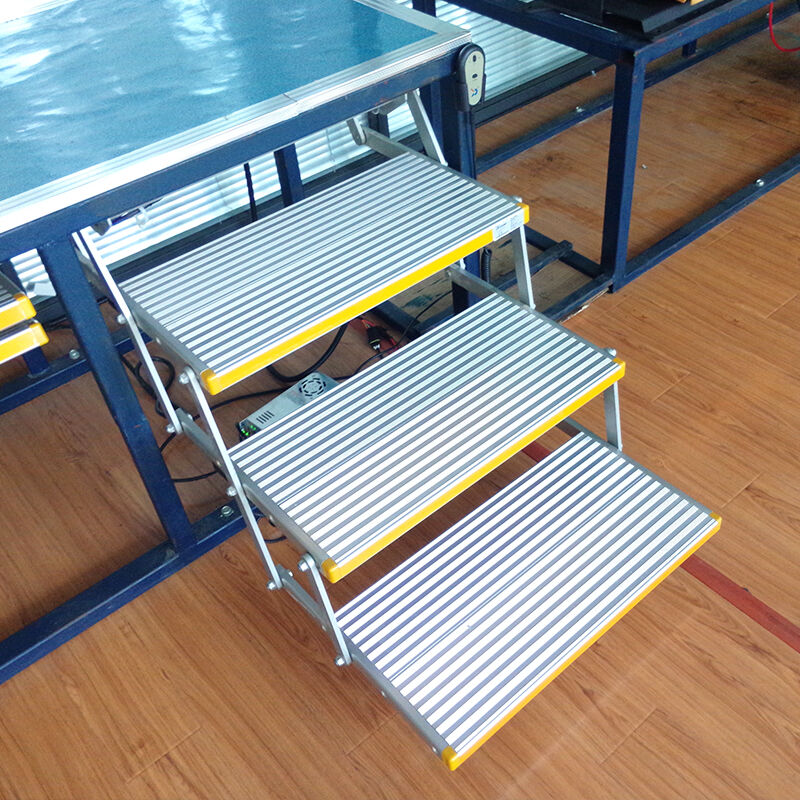
Certification Labels and Accountability: What They Mean for Accessible Vehicle Buyers
Decoding the Certified Modifier Label: Legal Responsibility and Post-Modification Verification
A certified modifier label is not a marketing badge—it’s a legally enforceable declaration that the vehicle meets FMVSS standards as modified. This label transfers legal responsibility for structural integrity, crashworthiness, and system interoperability from the OEM to the modifier. Verification includes weld-integrity audits, dynamic testing of securement anchors against FMVSS #209 and #213, and functional validation of ramps and lifts per FMVSS #403. Buyers must physically locate and verify this label before purchase; its absence invalidates OEM warranties and may void insurance coverage in the event of a claim. Independent third-party inspectors routinely confirm label validity using non-destructive testing and simulation-based review—making documentation, not appearance, the definitive measure of safety.
The Real Cost of Skipping Certification in Accessible Vehicles
Liability, Injury Data, and Why Qualified Mobility Dealers Are Essential
Skipping certification delivers false economy. Uncertified accessible vehicles correlate with a 300% higher injury rate during sudden stops or low-speed impacts (NHTSA, 2023), while liability claims stemming from non-compliant modifications average $740,000 per case (Ponemon Institute, 2023). The 2023 Mobility Safety Index further reveals that conversions performed by non-certified providers fail standardized crash simulations at four times the rate of certified builds. Qualified mobility dealers mitigate these risks through disciplined post-modification verification, full documentation of ADA and 49 CFR Part 37 compliance, and OEM-aligned warranty support for safety-critical systems. In accessible transportation, certification isn’t a checkbox—it’s the difference between regulatory alignment and catastrophic failure.
Table of Contents
- Regulatory Compliance: The Non-Negotiable Baseline for Accessible Vehicle Safety
- Critical Certified Systems That Protect Wheelchair Users in Accessible Vehicles
- Certification Labels and Accountability: What They Mean for Accessible Vehicle Buyers
- The Real Cost of Skipping Certification in Accessible Vehicles