EN
EN

Assessing Individual Mobility Requirements
Distinguishing driver vs. passenger roles, usage frequency, and environmental factors (terrain, climate, garage access)
Determining whether an individual will primarily drive or ride establishes foundational design parameters. Daily usage patterns directly influence durability requirements—frequent travelers need robust systems, while occasional users may prioritize cost-efficiency and simplicity. Environmental context further shapes adaptation decisions: mountainous terrain demands enhanced suspension and torque delivery; sub-zero climates necessitate heated hand controls and battery insulation; and narrow garage access requires precise turning radius calculations. Urban dwellers contend with tight parking and curb-height variability, whereas rural users prioritize ground clearance and off-road stability. These variables collectively determine whether a minivan, full-size van, or SUV serves as the optimal base platform.
Collaborating with certified rehabilitation engineers and occupational therapists for evidence-based recommendations
A multidisciplinary assessment team delivers scientifically validated solutions for accessible vehicle customization. Certified rehabilitation engineers analyze biomechanics to specify optimal control placement—minimizing driver fatigue—and securement systems that prevent wheelchair displacement during sudden stops. Occupational therapists evaluate transfer techniques and recommend ramp angles suited to shoulder strength limitations and seat height adjustments that reduce fall risk during entry and exit. This collaborative approach prevents costly over-modification by aligning adaptations with the user’s physical capabilities and anticipated progression in mobility needs. Evidence shows personalized assessments reduce secondary injuries by 37% compared to standardized solutions (Rehabilitation Engineering Society, 2023).
Choosing the Optimal Base Vehicle and Accessible Vehicle Conversion Type
Evaluating minivans, full-size vans, and SUVs for adaptive vehicle compatibility, entry height, and interior volume
Selecting the right platform requires balancing three key factors:
- Minivans offer the lowest entry height and efficient interior packaging—ideal for daily urban use and compact garages
- Full-size vans provide maximum headroom, cargo volume, and flexibility for larger mobility devices or multi-passenger transport
- SUVs deliver superior ground clearance for rural or unpaved terrain but sacrifice interior space and step-in height
Measure your primary mobility device against door thresholds, cabin dimensions, and garage clearance height. Also consider typical passenger load and storage needs—these help determine whether compact maneuverability or expansive capacity better supports long-term independence.
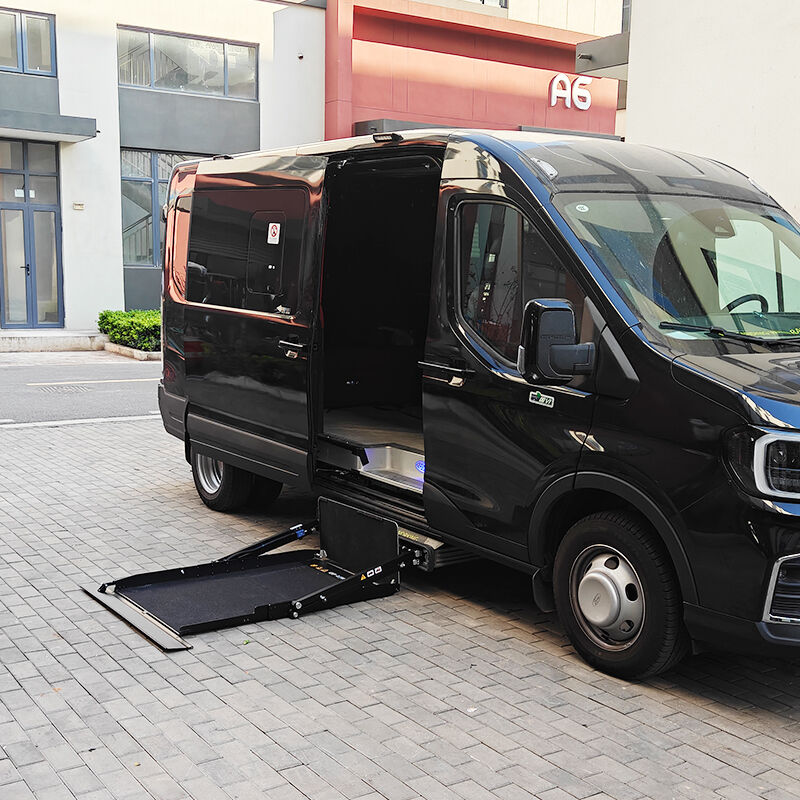
Side-entry vs. rear-entry accessible vehicle conversions: matching mobility devices, caregiver support, and daily infrastructure
Your access configuration impacts every journey:
| Feature | Side-Entry | Rear-Entry |
|---|---|---|
| Space Needs | Requires 4' side clearance | Fits standard parking |
| User Position | Driver/passenger front access | Rear passenger focus |
| Caregiving | Limited helper space | Ample assistant area |
| Weather | Sheltered boarding | Exposed loading zone |
Side-entry suits independent drivers transferring to front seats, while rear-entry benefits passengers requiring caregiver assistance or those navigating tight urban streets where parallel parking is frequent. Evaluate your regular routes—including garage widths, curb heights, and ramp deployment surfaces—to determine the safest, most practical configuration.
Implementing Core Accessibility Modifications in the Accessible Vehicle
Primary driving aids: hand controls, electronic accelerator/brake systems, and steering adaptations
Critical driving modifications empower individuals with mobility limitations to operate vehicles independently. Hand controls replace traditional pedals, enabling acceleration and braking through lever systems calibrated to individual strength and coordination. Electronic accelerator/brake interfaces integrate seamlessly with factory vehicle electronics for responsive, predictable operation. Steering adaptations include reduced-effort systems and ergonomic grips designed for limited hand dexterity or grip strength. All such modifications undergo rigorous testing to meet Federal Motor Vehicle Safety Standards (FMVSS) and maintain crash compatibility. Occupational therapists often recommend specific configurations based on functional assessments—proper implementation reduces driver fatigue by 62% during extended travel (Rehabilitation Engineering Society, 2023).
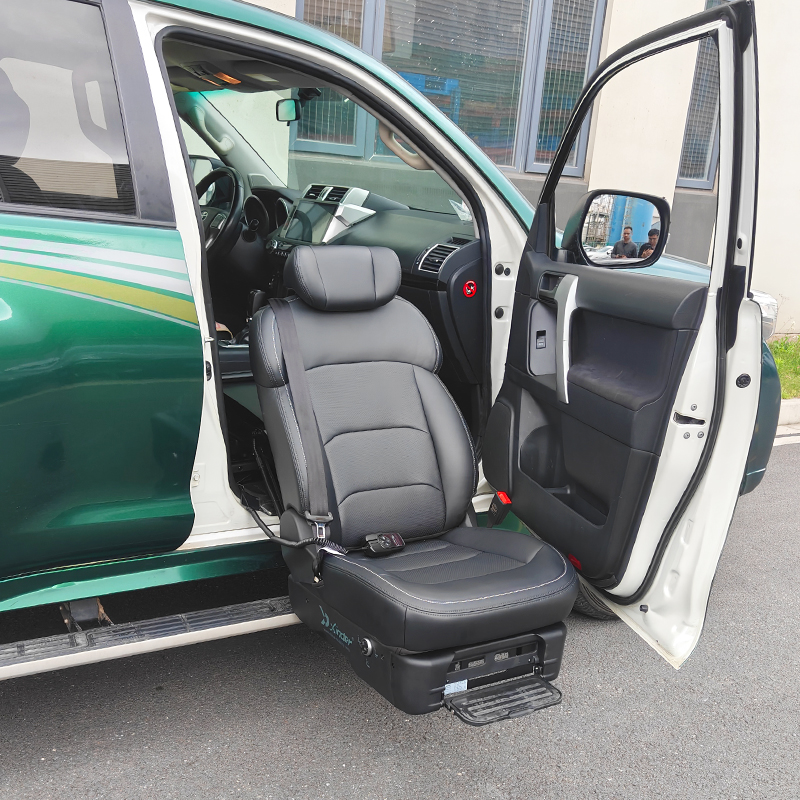
Passenger-centric features: rotating seats, transfer platforms, integrated ramps/lifts, and lowered floor configurations
Passenger accessibility prioritizes safe, dignified boarding and secure transit. Rotating power seats facilitate smooth transfers between wheelchairs and vehicle seating without requiring repositioning assistance. Transfer platforms create stable bridging surfaces, while integrated ramps deploy automatically with incline angles under 7 degrees—meeting ADA-recommended thresholds for safe, low-effort wheelchair access. Lowered floor configurations—achieved through structural reinforcement and certified engineering—provide essential headroom and interior maneuverability. These features collectively reduce boarding time by 78% compared to non-adapted vehicles. Crucially, all modifications preserve structural integrity through reinforced frames and certified wheelchair securement points compliant with NMEDA QAP standards.
Validating Safety, Compliance, and Long-Term Adaptability of the Accessible Vehicle
Adherence to FMVSS, NMEDA QAP certification, crash testing protocols, and ADA-related accessibility benchmarks
Safety begins with compliance. Conversions must meet Federal Motor Vehicle Safety Standards (FMVSS) for structural integrity, occupant protection, and post-modification crash performance. Independent crash testing validates safety after major alterations—including lowered floors, ramp installations, and relocated seating. NMEDA Quality Assurance Program (QAP) certification verifies that modifications are performed by trained technicians using approved methods and materials. Additionally, adherence to Americans with Disabilities Act (ADA) accessibility benchmarks ensures barrier-free entry, securement, and egress. Together, these standards significantly reduce accident risks and uphold occupant protection across diverse real-world conditions.
Future-proofing: modular interiors, scalable tech integration (e.g., voice-activated controls), and reconfigurable securement systems
Long-term value lies in adaptability. Modular interiors feature interchangeable components—such as removable seating, adjustable flooring panels, and tool-free mounting rails—that allow cabin reconfiguration as physical needs evolve. Scalable technology integration includes upgradable voice-activated controls for driving functions, climate, lighting, and navigation—designed to accommodate changing cognitive or motor abilities. Reconfigurable securement tracks enable seamless adaptation to evolving wheelchair dimensions or mounting configurations without structural modification. This forward-compatible engineering extends functional lifespan, sustains independence through life transitions, and minimizes long-term ownership costs.