EN
EN

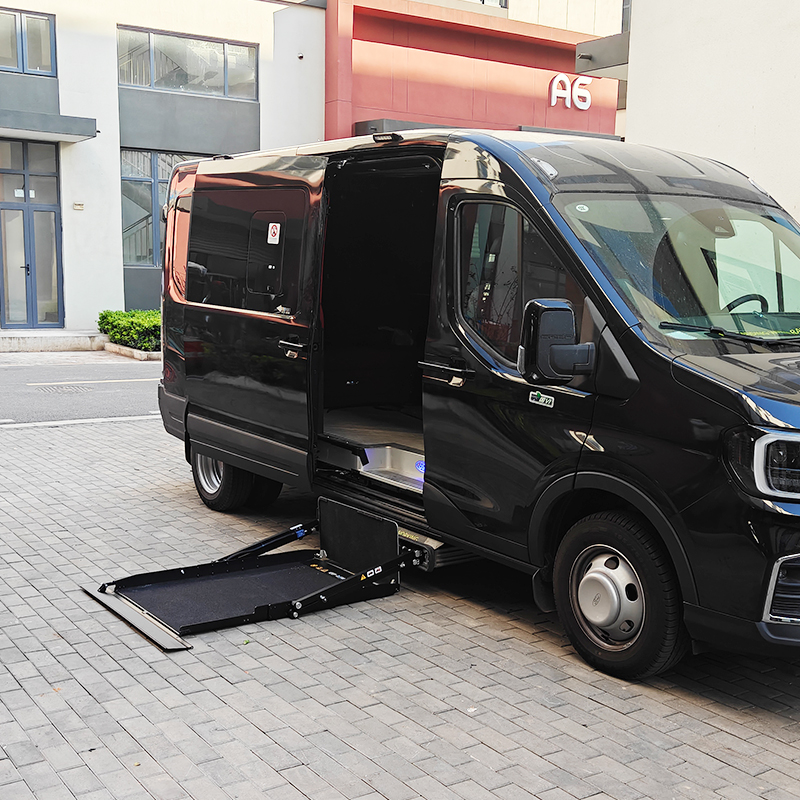
Wheelchair Tiedown and Occupant Restraint Systems (WTORS) in Wheelchair Vans
4-Point Tie-Downs with 2,500-lb Attachment Strength: Engineering Standards and Real-World Performance
A 4-point tie-down system secures a wheelchair at all four corners using heavy-duty straps anchored to reinforced floor points. Each anchor must withstand a pull force of at least 2,500 pounds—as specified by SAE J2249 and RESNA WC18—to prevent detachment during a collision, accounting for inertial forces that can exceed 5,000 pounds in severe frontal impacts. In dynamic sled tests simulating a 30-mph frontal crash, these systems consistently maintain wheelchair stability under deceleration forces exceeding 20 g. Real-world crash analyses confirm their reliability: a 2019 University of Michigan Transportation Research Institute study found that properly applied 4-point restraints prevented significant displacement in 97% of frontal impact scenarios.
Optimal performance requires both a WC19-compliant wheelchair with designated securement brackets and correct strap tensioning. While highly reliable, this method typically depends on caregiver assistance—highlighting the need for more independent securement solutions as autonomous vehicle technologies evolve. For wheelchair van conversions, four-point tie-downs remain the most common and proven securement method, ensuring occupant stability across all impact directions. Despite emerging automatic docking systems, the 4-point approach retains broad adoption due to its compatibility with diverse wheelchair models and its well-documented crashworthiness.
Crash-Tested WTORS Integration: FMVSS No. 222 Compliance and Dynamic Testing Protocols
Federal Motor Vehicle Safety Standard (FMVSS) No. 222 establishes rigorous dynamic testing requirements for wheelchair tiedown and occupant restraint systems in buses—and by extension, many wheelchair vans. Vehicles must pass a 30-mph (48 km/h) sled test equivalent to a 20 g deceleration, using a loaded wheelchair and anthropomorphic test device. The standard limits wheelchair forward excursion to 24 inches and mandates a Head Injury Criterion (HIC) below 1,000 to mitigate brain trauma risk. NHTSA data shows FMVSS 222–compliant WTORS reduce maximum occupant head acceleration by 45% compared to non-integrated setups.
The test protocol simulates a 30-mph rigid barrier crash pulse lasting 80–100 milliseconds, evaluating the entire restraint chain—from floor anchors through tie-down straps to the occupant’s seatbelt—as a unified system. In a wheelchair van, adherence to FMVSS 222 ensures crash forces are distributed across the vehicle structure rather than concentrated at weak points, preserving survival space and preventing catastrophic failure. Though not mandatory for all vehicle classes, leading conversion companies voluntarily certify their models to FMVSS 222—a benchmark aligned with WC19 wheelchair compatibility and equivalent to the protection offered by original-equipment vehicle seats.
Occupant Restraint Systems: Lap-and-Shoulder Belts vs. Pelvic-Only Positioning Belts
WC19-Compliant Lap-and-Shoulder Belts Reduce Head Injury Risk by 62% in Rear-Impact Simulations
Occupant protection hinges on distributing crash forces across the body’s strongest structures. A 2023 rear-impact simulation study by the University of Michigan Transportation Research Institute found that WC19-compliant lap-and-shoulder belts reduce head injury risk by 62% compared to pelvic-only positioning belts. The three-point design spreads load over the pelvis, chest, and shoulders—limiting forward excursion and reducing secondary impact with vehicle interiors. In real-world fatal crash analysis, lap-and-shoulder belts in vans and SUVs proved 63% more effective at preventing fatality than lap belts alone.
WC19 mandates dynamic sled testing with a 48-km/h (30-mph) frontal pulse to verify integrated performance among the belt system, wheelchair tie-downs, and occupant kinematics. Proper upper-torso restraint is especially critical for wheelchair-seated passengers, who often sit higher and farther forward—increasing vulnerability to head and neck injuries during sudden stops. Full upper-body restraints prevent submarining and violent head rotation, risks that pelvic-only belts cannot mitigate.
Why Pelvic-Only Positioning Belts Fail Crash Safety Standards — NHTSA Findings and ADA Implications
Pelvic-only positioning belts are designed for postural support during routine travel—not for managing crash-level loads. NHTSA research consistently shows they allow uncontrolled forward flailing of the torso and head, significantly increasing the risk of severe head and chest injuries. A landmark 1999 fatality study found lap belts alone reduced fatal injury risk by only 32% in cars and 63% in vans and SUVs—far below the protection delivered by lap-and-shoulder systems.
For wheelchair vans, WC19 explicitly rejects pelvic-only belts as adequate occupant restraint; full upper-torso belts are required. Using such belts for crash protection may violate the Department of Transportation’s ADA regulations, which mandate equivalent safety for passengers with disabilities. Transportation providers relying on positioning belts alone could face liability for failing to provide “reasonable accommodation” of safe travel. Modern wheelchair-accessible vehicles must integrate proper three-point restraints compliant with both FMVSS 213 and WC19—ensuring occupants remain securely positioned and absorb crash energy through skeletal structures, not soft tissue.
Interior Structural Safety in Wheelchair Vans: Autofloor, Anchoring, and Lighting
Autofloor Crash-Tested Flooring: How Reinforced Subfloor Anchoring Prevents Wheelchair Displacement
The structural backbone of a safe wheelchair van is its floor. Autofloor systems integrate a reinforced subfloor directly into the vehicle’s chassis, creating a continuous load path that resists intrusion during collision. Crash-tested to meet FMVSS standards, these platforms embed tie-down anchor points into the reinforced frame—not just sheet metal—ensuring robust load transfer. In dynamic testing, when paired with four-point restraints, the autofloor distributes crash forces—often exceeding 20 g—across the entire base, preventing chair pull-out or lateral shift. This factory-engineered integration locks the wheelchair into a purpose-built platform, enabling the restraint system to function as a single, cohesive unit and dramatically reducing ejection risk. Unlike aftermarket installations—where anchor bolts may tear out—the autofloor eliminates structural weak points. While interior lighting supports safe maneuvering, it is the subfloor’s integrity that ultimately keeps the occupant in place.
WC19 Wheelchair Compatibility and Vehicle Modification Standards for Wheelchair Vans
The WC19 Standard Gap: Only 12% of Commonly Used Wheelchairs Meet Full Crashworthiness Criteria
Despite crash-tested securement systems in today’s wheelchair vans, only 12% of commonly used wheelchairs meet all WC19 crashworthiness requirements, according to a 2023 UMTRI report. The voluntary standard demands successful completion of a 30-mph frontal impact test, four labeled and engineered tie-down points, and a wheelchair-anchored pelvic belt. Without federal enforcement, most chairs lack these features—creating a dangerous mismatch where even a perfectly modified van cannot deliver full crash protection. This gap underscores a critical limitation: vehicle-level safety depends not only on proper conversion but also on the wheelchair itself meeting WC19 criteria. Closing this gap requires coordinated action from manufacturers, clinicians, and funding agencies to prioritize and incentivize WC19-compliant seating.
FAQ
Q: What is a 4-point tie-down system?
A: A 4-point tie-down system secures a wheelchair at all four corners using heavy-duty straps anchored to reinforced floor points to ensure stability during a collision.
Q: How do FMVSS No. 222 compliant WTORS enhance safety?
A: FMVSS No. 222 sets dynamic crash test standards to ensure WTORS distribute crash forces across the vehicle structure, reducing the risk of occupant injury.
Q: Why are lap-and-shoulder belts better than pelvic-only belts?
A: Lap-and-shoulder belts distribute crash forces across the pelvis, chest, and shoulders, reducing head injury risk by 62%, while pelvic-only belts fail to adequately prevent forward flailing and secondary injuries.
Q: What is WC19, and why is it important?
A: WC19 is a voluntary crashworthiness standard for wheelchairs, requiring them to meet specific safety criteria. It ensures compatibility with securement systems in vans to enhance occupant safety.
Q: What is an Autofloor system?
A: Autofloor is a crash-tested reinforced subfloor system integrated into a van’s chassis, featuring embedded tie-down anchor points for enhanced structural integrity during crashes.
Table of Contents
-
Wheelchair Tiedown and Occupant Restraint Systems (WTORS) in Wheelchair Vans
- 4-Point Tie-Downs with 2,500-lb Attachment Strength: Engineering Standards and Real-World Performance
- Crash-Tested WTORS Integration: FMVSS No. 222 Compliance and Dynamic Testing Protocols
- Occupant Restraint Systems: Lap-and-Shoulder Belts vs. Pelvic-Only Positioning Belts
- Interior Structural Safety in Wheelchair Vans: Autofloor, Anchoring, and Lighting
- WC19 Wheelchair Compatibility and Vehicle Modification Standards for Wheelchair Vans
- FAQ