EN
EN

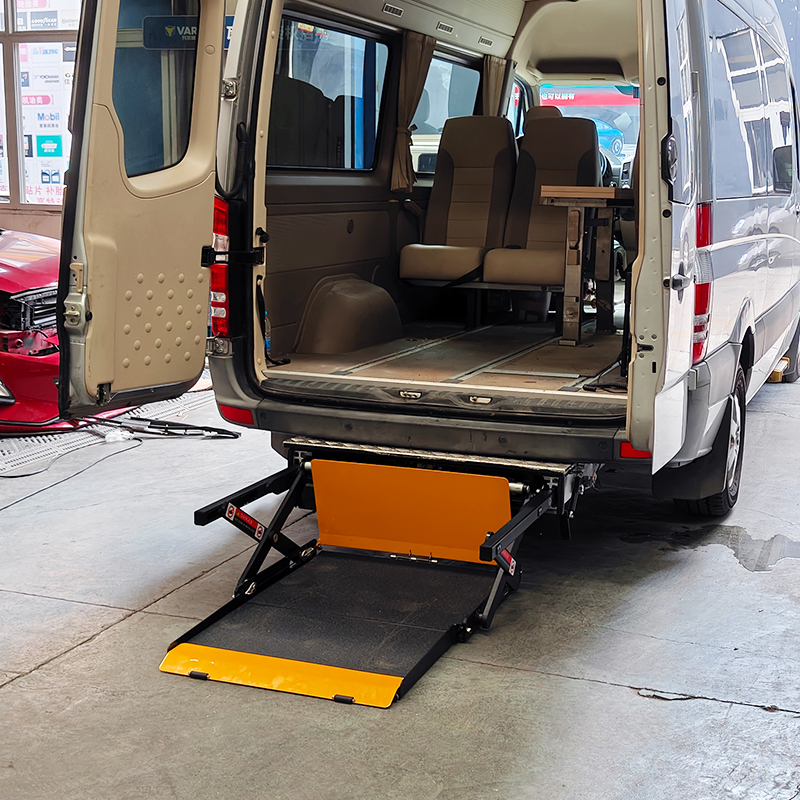
Safety First: How Proper Wheelchair Storage Prevents Injury and Meets Regulatory Standards
Reducing Crash-Related Risks Through Certified Wheelchair Securement
In a vehicle collision, an unsecured wheelchair can become a dangerous projectile. Crash tests show that even at low speeds, a wheelchair can exert forces exceeding 20 Gs—posing severe injury risks to the occupant and others (NHTSA 2023). Certified wheelchair securement systems mitigate these risks using four-point tie-downs, occupant restraint belts, and docking stations that lock the wheelchair frame securely to the vehicle floor. These systems distribute crash forces evenly, reducing ejection risk and secondary impacts. A University of Michigan Transportation Research Institute study found that proper securement cuts the risk of serious injury by 70% compared to unsecured transport (2022). Beyond physical safety, certified systems maintain stability during sudden braking or swerving—preventing tipping and protecting the chair from damage. For users, knowing their chair remains fixed allows focus on the journey—not the danger—and supports safe, independent travel without manual transfers—a critical advantage for aging populations and those with limited upper-body strength.
FMVSS 209 and ISO 10542 Compliance: Why Certification Matters for Wheelchair Storage
FMVSS 209 sets requirements for seat belt assemblies used in wheelchair occupant restraint systems, ensuring they withstand specified loads and latch securely. ISO 10542—the global benchmark for wheelchair tiedown and occupant restraint systems (WTORS)—mandates dynamic testing simulating a 30-mph frontal crash with a wheelchair and test dummy. A system earning ISO 10542 certification has proven it can keep both wheelchair and occupant in place while minimizing injury. This is not a formality: it confirms that tie-down straps, floor anchorages, and retractors function as an integrated safety system under extreme conditions. Without certification, storage devices may fail catastrophically. Insurers and fleet operators often require ISO 10542 compliance to reduce liability, and certified systems are engineered for durability across years of repeated use—unlike non-certified alternatives that may degrade unpredictably. For families and healthcare providers, choosing certified storage means investing in independently verified protection. The peace of mind is invaluable.
Independence and Dignity: How Integrated Wheelchair Storage Expands Mobility Options
Integrated wheelchair storage transforms a vehicle from simple transport into a cornerstone of personal freedom. Properly designed storage secures the mobility aid and enables seamless transitions—from street to seat—supporting dignity, autonomy, and control over daily schedules without reliance on others for loading or unloading.
From Passenger to Driver: Empowering Users with Seamless Wheelchair-to-Vehicle Transitions
Modern wheelchair storage systems place the user at the center of the driving experience. When a wheelchair can be independently docked, stowed, and retrieved from the driver’s position, the vehicle becomes a true extension of the person’s mobility. Automated docking and power-assisted loading reduce physical strain and eliminate the need for assistance. The result is a dignified, self-directed journey—completed in minutes. This capability is especially vital for those with upper-body limitations, preserving energy for driving itself. Integrated storage that doubles as a secure driver’s seat base removes the hazardous, exhausting transfer to a standard vehicle seat. By eliminating these barriers, the vehicle becomes a tool for everyday autonomy—whether commuting, running errands, or visiting friends.
WAVs vs. Aftermarket Conversions: Evaluating Accessibility, Cost, and Long-Term Usability
Choosing between a purpose-built Wheelchair Accessible Vehicle (WAV) and an aftermarket conversion hinges on how wheelchair storage is engineered into the vehicle. WAVs from dedicated manufacturers treat the wheelchair as a core design element—with lowered floors, integrated ramps, and storage zones that preserve passenger space and sightlines. Aftermarket conversions, while often less expensive upfront, can compromise headroom, create awkward entry angles, or block rear visibility and cargo area. Over time, WAVs typically deliver superior durability and usability because their structure, safety systems, and interior layout are engineered holistically around the stored wheelchair. Maintenance costs may also be lower, as original equipment and modifications work in harmony. For users planning long-term ownership, the WAV’s retained accessibility, reliability, and resale value often justify its higher initial cost. The decision ultimately rests on whether the storage solution supports daily independence—without introducing new obstacles.
Smart Space Optimization: Designing Vehicle Layouts Around Wheelchair Storage Needs
Interior architecture must treat wheelchair storage not as an afterthought—but as a central design parameter. Traditional layouts force trade-offs between securing a mobility device and retaining passenger seats or cargo volume. Forward-thinking designs resolve this through reconfigurable floor plans. Modular track systems now allow seating to be removed or repositioned without tools—creating a dedicated wheelchair zone that converts back to standard seating when needed. This flexibility ensures one vehicle serves multiple roles—passenger transport in the morning, cargo duty in the afternoon—while maintaining the 30" × 48" clear floor space recommended for wheelchair accommodation (UMTRI 2023).
Modular Wheelchair Storage Systems That Maximize Cargo and Occupant Capacity
Modular storage systems break down the challenge into interchangeable components for tailored functionality. Fleet operators can specify floor-mounted docking stations, overhead roof stowage, or rear-cargo hoists—all built on the same platform. Roof stowage systems, for example, use automated lifts to secure a folded wheelchair in a weatherproof external cassette—reclaiming all interior floor area for passengers. Inside, docking stations with integrated power-charging ports and occupant restraints can be installed at multiple floor positions. This approach enables service providers to rotate vehicle assignments without costly refits—delivering true multi-purpose utility. Leading conversion providers now deploy these platforms for both paratransit and family use, proving smart design upholds both cargo capacity and human dignity on every trip.
Measurable ROI: Economic and Social Advantages of Investing in Wheelchair Storage Solutions
Tax Credits, Insurance Incentives, and Lowered Healthcare Costs from Improved Access
Investing in integrated wheelchair storage delivers measurable financial and social returns. In the U.S., vehicle accessibility modifications often qualify for the federal Disabled Access Credit—potentially reducing net cost by up to $5,000 per vehicle. Many insurers offer premium discounts for certified securement systems that lower crash-related injury risk, with some reporting a 10–15% reduction in liability exposure. Beyond direct savings, improved access significantly reduces secondary healthcare expenses: a 2021 analysis of mobility-enhancing interventions showed appropriate vehicle storage prevented fall-related injuries during transfers, trimming annual home healthcare costs by an average of $2,400 per user. These savings compound with increased community participation—confirming that targeted wheelchair storage is not an expense, but a strategic investment in long-term well-being and financial resilience.
FAQ Section
What is the FMVSS 209 standard for wheelchair storage?
FMVSS 209 ensures seat belt assemblies in wheelchair restraint systems can withstand specified loads and latch securely to provide safety in collisions.
Why is ISO 10542 certification important?
ISO 10542 mandates dynamic crash testing for wheelchair securement systems to ensure safety and durability under extreme conditions, minimizing injury risks.
What are the benefits of integrated wheelchair storage?
Integrated wheelchair storage enhances autonomy, reduces physical strain, and provides a smooth transition into and out of the vehicle, improving overall mobility and dignity.
How does investing in wheelchair storage provide economic benefits?
By qualifying for tax credits, reducing insurance premiums, and lowering healthcare costs associated with injuries, wheelchair storage solutions offer significant financial returns.
What should I consider when choosing between a WAV and aftermarket conversion?
Consider factors like structural durability, accessibility, long-term usability, and whether the design treats wheelchair storage as a central element to maintain independence without introducing new obstacles.
Table of Contents
- Safety First: How Proper Wheelchair Storage Prevents Injury and Meets Regulatory Standards
- Independence and Dignity: How Integrated Wheelchair Storage Expands Mobility Options
- Smart Space Optimization: Designing Vehicle Layouts Around Wheelchair Storage Needs
- Measurable ROI: Economic and Social Advantages of Investing in Wheelchair Storage Solutions
- FAQ Section