EN
EN

Safety and Regulatory Foundations of Universal Wheelchair Storage
Crash-tested WTORS requirements across vehicle classes (minivans, SUVs, trucks, adaptive vans)
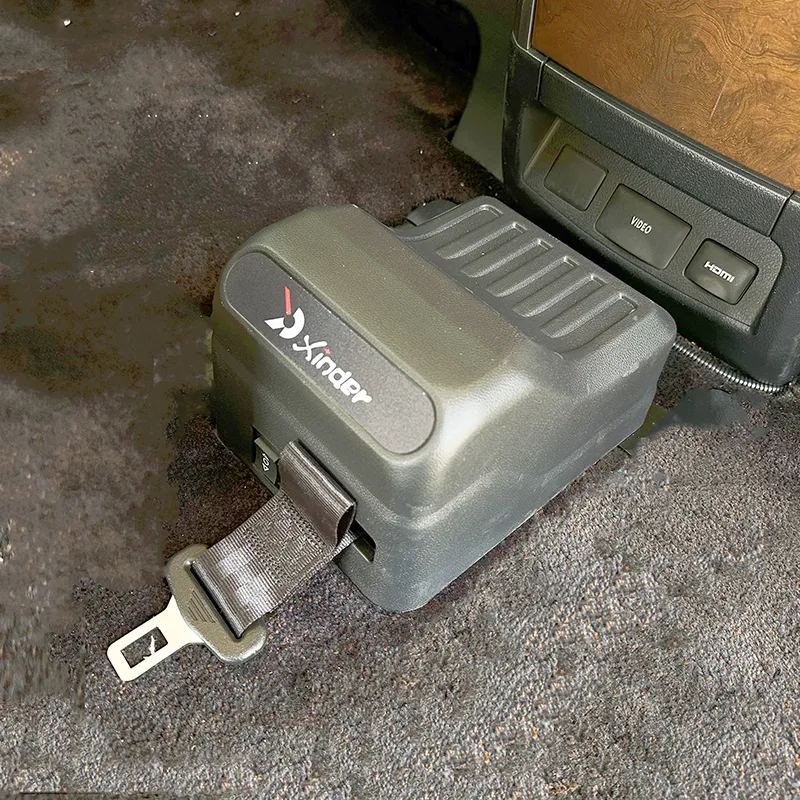
Universal wheelchair storage systems must integrate crash-tested Wheelchair Tie-down and Occupant Restraint Systems (WTORS) compliant with ISO 10542-1. This standard mandates performance under dynamic frontal impact forces exceeding 3,000 lbf—regardless of vehicle class. Minivans typically support integrated docking beneath low-floor panels; SUVs and trucks require reinforced anchor points to handle higher inertial loads; adaptive vans rely on purpose-built structural frames engineered for vertical stacking and consistent load distribution. All configurations demand standardized hardware—including certified hooks, retractors, and tension locks—and prohibit non-compliant solutions like generic L-track systems. WTORS components must undergo recertification every five years to ensure ongoing integrity.
UDIG standardization: Enabling interoperable wheelchair storage without vehicle-specific hardware
The Universal Docking Interface Geometry (UDIG) specification eliminates proprietary interfaces by defining a globally harmonized four-anchor receptacle pattern. UDIG-compliant docking bases are constructed from rigid welded steel to maintain positional accuracy under 6g dynamic loading, with latch mechanisms rated for ≥2,200 N pull resistance. This enables seamless compatibility across minivans, SUVs, adaptive vans, and custom platforms—without vehicle-specific brackets or modifications. Wheelchair manufacturers embed UDIG receivers during fabrication, reducing installation time and cost. A 2022 industry analysis found UDIG adoption cut average installation expenses by 34% annually. Crucially, release handles remain fully accessible during emergency egress, preserving both safety and usability.
How Vehicle Architecture Determines Wheelchair Storage Feasibility
Vehicle architecture establishes non-negotiable physical constraints that dictate whether safe, efficient wheelchair loading and securement are possible. Floor height, headroom, and securement zone geometry vary significantly across minivans, SUVs, trucks, and adaptive vans—directly influencing caregiver effort, user independence, and system reliability. Minivans offer the lowest floor heights (12–15 inches), enabling easier ramp or manual transfer. SUVs and crossovers sit higher (18–22 inches), often requiring lift-assisted boarding or transfer steps. Trucks—with cab floors exceeding 24 inches—typically necessitate dedicated hoists or platform lifts. Headroom must accommodate both the seated occupant’s height and tie-down hardware; powered wheelchairs add 5–6 inches to overall clearance needs. The securement zone—the unobstructed floor area where anchors or docking stations mount—must align precisely with the wheelchair’s wheelbase and avoid interference from structural ribs, seat tracks, or wiring harnesses. While many adaptive vans now meet the industry-recommended 60-inch turning radius, third-party conversions frequently lack standardized anchor spacing, forcing custom bracketing or track adjustments.
Critical Dimensions: Floor Height, Headroom, and Securement Zone Geometry by Vehicle Type
Floor height directly affects loading ergonomics: lower floors reduce lift travel distance and tipping risk during transfers. Headroom must clear both occupied wheelchair height and any overhead storage or restraint hardware—especially critical in rear-trunk configurations where folded chair height (28–32 inches for manual models) may exceed opening dimensions. Rigid-frame chairs (32–36 inches tall) often require seat or backrest removal to fit, adding time and complexity. Securement zone geometry—particularly front-to-rear anchor spacing—must match the wheelchair’s wheelbase. Adaptive van converters increasingly use standardized four-point patterns, but inconsistent OEM anchor placement across makes and models still compels installers to drill new holes or deploy adjustable mounting systems. Failure to align these dimensional parameters compromises securement integrity and can render a system unsafe or functionally unusable.
Folding vs. Rigid Wheelchair Frame Compatibility with Common Vehicle Loading Configurations
Folding wheelchairs dominate consumer markets due to their collapsible cross-brace design, which reduces footprint by 30–40% and enables trunk, footwell, or cargo-area storage without disassembly. Rigid wheelchairs—favored for propulsion efficiency and durability—lack folding joints and typically require wheel or backrest removal to achieve comparable compactness. This adds 45–90 seconds per loading cycle, a meaningful burden for daily commuters. For trunk loading, quick-release wheels allow many rigid chairs to fit mid-size sedans—but taller models may exceed trunk lip height. Ramp- or lift-based entry accommodates intact rigid chairs, provided interior length and width permit full roll-in and secure positioning. Vehicles designed with a dedicated wheelchair storage zone (e.g., behind the second row) work most efficiently with folding chairs; retrofitting rigid-chair compatibility often demands cradles, repositioned tie-downs, or floor cutouts. Matching frame type to vehicle architecture is essential—not just for convenience, but to sustain long-term user autonomy and reduce caregiver strain.
Electric Wheelchair Storage Challenges and Real-World Solutions
Electric wheelchairs introduce distinct spatial and operational challenges due to increased size, weight (often 200–400 lbs), and limited folding capability—even among “foldable” models. These factors constrain loading methods, influence vehicle selection, and affect daily usability.
Size, weight, and folding mechanisms: Impact on trunk, ramp, and in-cabin wheelchair storage
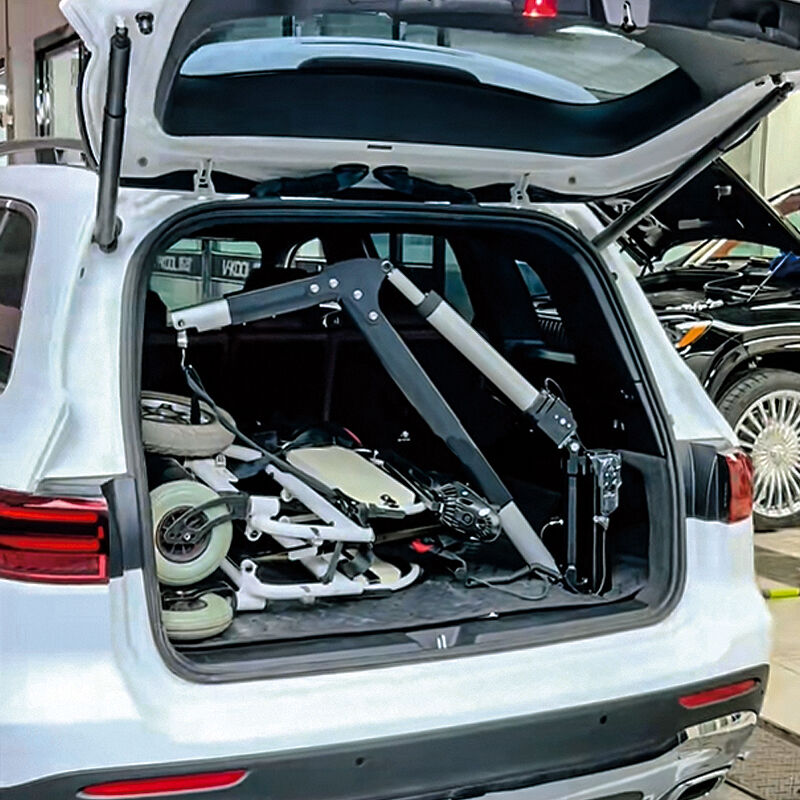
Heavier, bulkier electric wheelchairs rarely fit into sedan trunks without partial disassembly—and even then, trunk depth and lip height often create clearance issues. Folding electric models improve portability but may sacrifice weight capacity or stability. Ramp-based entry remains the most reliable method for full-roll-in transport, yet ramp angle and length depend heavily on vehicle floor height and approach geometry. A lightweight folding electric chair may be lifted into a hatchback, whereas a rigid heavy-duty model typically requires a minivan or adaptive van with an integrated ramp or lift. Ultimately, successful storage hinges on alignment between the chair’s static and dynamic dimensions and the vehicle’s structural envelope—not just nominal cargo volume.
NHTSA 2023 mobility survey insights: Loading efficiency and disassembly frequency across vehicle types
A 2023 NHTSA mobility survey revealed stark differences in loading outcomes by vehicle class. Minivans equipped with ramps enabled 92% of users to load electric wheelchairs fully assembled—significantly reducing disassembly frequency and associated fatigue. In contrast, 68% of SUV users reported needing to remove wheels or detach components to overcome height or threshold limitations. These findings reinforce that vehicle architecture—not just wheelchair features—drives real-world usability. Flexible, purpose-built storage solutions must therefore account for both device specifications and the physical realities of common vehicle platforms.
Practical Limitations: Why Sedans and Hatchbacks Fall Short for Reliable Wheelchair Storage
Sedans and hatchbacks lack the spatial, structural, and regulatory foundations required for safe, dependable wheelchair storage. NHTSA’s 2023 mobility survey found sedan trunk openings average less than 42 inches wide—insufficient for rigid-frame wheelchairs, which commonly measure 52 inches in length. Hatchbacks generally lack integrated lifts or ramps rated for standard electric wheelchair weights (up to 350 lbs), and their cargo volumes rarely exceed 20 cubic feet—forcing frequent disassembly. The ADA identifies such practices as a major boarding risk factor due to increased physical demand and potential for injury. Interior maneuvering space in compact vehicles falls well short of the 60-inch minimum recommended for safe transfers, while low rooflines obstruct overhead conversion options and compromise headroom for seated users. Most critically, sedans and hatchbacks cannot accommodate secure wheelchair tie-downs without obstructing driver sightlines or rearview mirrors—and no factory-produced sedan offers rear access panels compatible with ADA-compliant ramp installations. These inherent design limitations make practical, compliant wheelchair storage fundamentally incompatible with standard compact automotive platforms.
FAQs
What is WTORS, and why is it essential?
WTORS stands for Wheelchair Tie-down and Occupant Restraint Systems. It ensures wheelchair users are securely restrained during vehicle transport, meeting ISO 10542-1 crash-test standards for safety.
How does UDIG improve wheelchair storage system compatibility?
UDIG (Universal Docking Interface Geometry) provides a standardized design, enabling wheelchair docking bases to be compatible across different vehicle types without proprietary hardware.
Why do floor height and headroom matter for wheelchair storage?
They influence the ease of wheelchair loading, user safety, and comfort. Lower floors reduce transfer effort, while sufficient headroom ensures both the occupying wheelchair and restraint hardware fit without obstruction.
What are the main challenges with electric wheelchair storage?
Electric wheelchairs are larger, heavier, and often less foldable, limiting compatibility with smaller vehicles and requiring ramps or lifts for safe and efficient transportation.
Why are sedans and hatchbacks unsuitable for wheelchair storage?
They lack the necessary space, structural strength, and lift equipment for reliable and ADA-compliant wheelchair storage, posing risks to safety and usability.