EN
EN

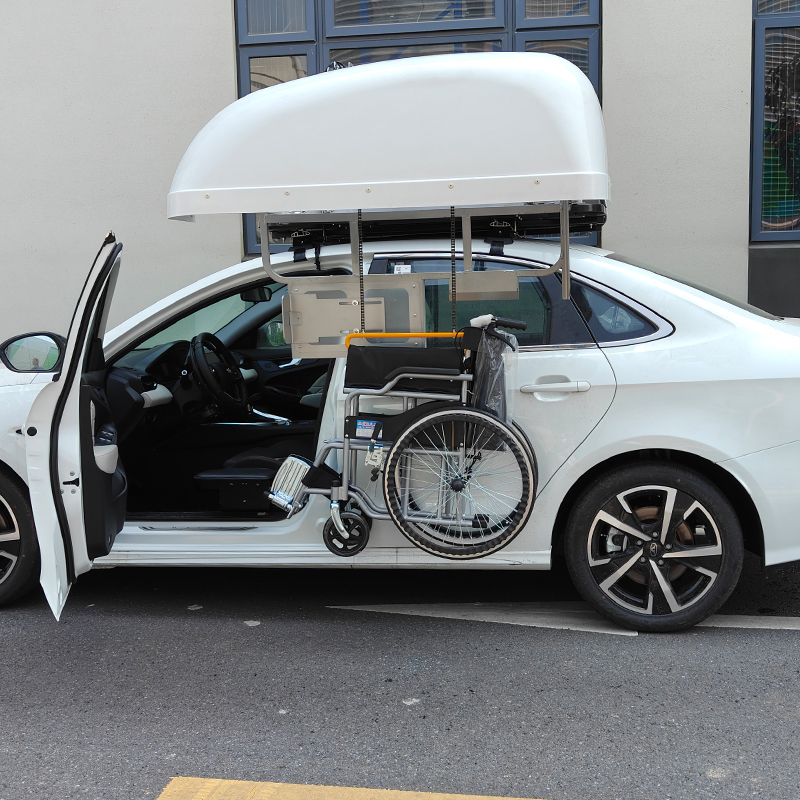
Wheelchair Storage Eliminates Physical Strain and Safety Risks During Loading
The Ergonomic Toll of Manual Wheelchair Handling in Vehicles
Manual lifting and stowing of a wheelchair in a vehicle imposes repetitive, high-risk biomechanical loads on the body. Even lightweight models typically weigh 30–50 pounds, and the task often requires caregivers—or users themselves—to lift, twist, extend, and lower the chair into a confined cargo area. This combination of awkward posture, force, and frequency contributes directly to musculoskeletal injury. A longitudinal analysis found that 68% of informal caregivers experienced shoulder or lower back pain linked to daily wheelchair loading (Journal of Occupational Rehabilitation, 2019). Similarly, wheelchair users who self-load face elevated risk: over half develop rotator cuff injuries within five years of regular manual lifting (American Journal of Physical Medicine & Rehabilitation, 2021). Acute hazards—including slips, drops, and falls during transfer—can cause fractures or lacerations to both person and equipment. These cumulative physical costs translate into lost workdays, medical expenses, and diminished independence—making manual handling an unsustainable default.
How Integrated Wheelchair Storage Reduces Injury Risk and Effort
Integrated wheelchair storage systems redesign the interaction entirely, replacing human lifting with mechanical assistance. Power lifts, automated cargo trays, and overhead racking eliminate the most hazardous element: the manual vertical lift combined with forward bending. By maintaining an upright torso and applying controlled, motorized motion, these systems reduce peak spinal compression forces by up to 80% compared to stoop lifts (National Institute for Occupational Safety and Health, 2020). This reduction in physical demand directly lowers injury incidence: a 2022 retrospective analysis across fleets of accessible vans equipped with powered storage showed a 45% decline in workers’ compensation claims related to lifting injuries within the first year. Mechanized systems also minimize risks from sudden drops or misjudged clearances that can damage interiors or endanger users. When fully integrated—sequenced with ramp or lift deployment—the entire loading workflow becomes predictable, single-action, and physically effortless, transforming a high-risk task into a routine, safe operation.
Secure Wheelchair Restraint Is Essential—Not Optional—for Safe Travel
WTORS Compliance and Crash-Test Validated Performance
Safe transit for wheelchair users begins with Wheelchair Tie-down and Occupant Restraint Systems (WTORS) validated through rigorous crash testing. Compliance with WC18 and WC19 standards—established by leading safety consortiums—is the non-negotiable technical baseline. A WC19-certified wheelchair is engineered to withstand crash forces, while a WC18-compliant four-point tiedown system secures the equipment to the vehicle floor. Critically, occupant safety requires a separate, dedicated restraint: a lap-and-shoulder belt anchored independently to the vehicle structure, applying force only to robust anatomical points—the pelvis, sternum, and shoulder. Relying on one system for both chair and passenger is a fundamental safety failure. Pre-trip checks must verify compatibility between the specific wheelchair and securement components—and confirm no wear or damage—so certification translates into real-world protection during dynamic crash events.
Why 'Storage' Without Proper Securement Undermines Safety Goals
Viewing wheelchair storage as merely a stationary docking point ignores the kinetic forces present in even moderate-speed travel. An unsecured or improperly tethered wheelchair poses severe danger during emergency braking. The goal of an accessible vehicle is not just to stow mobility equipment—but to create a survivable space for all occupants. A loose wheelchair can become a lethal projectile, inflicting catastrophic injury on the user and others nearby, completely negating any convenience gained from the storage solution. A system that holds the chair in place when parked offers zero protective value in a 30-mph impact. True in-vehicle safety demands a tie-down system designed to dynamically absorb energy and limit forward movement. For passenger safety, storage must be synonymous with a fully engaged, crash-tested securement protocol—not a passive parking brake substitute. This distinction separates a logistical feature from a lifesaving safety requirement.
Wheelchair Storage Enables Seamless Integration with Full Vehicle Accessibility Systems
Proper wheelchair storage does more than hold a mobility device—it serves as the connective tissue aligning all accessibility components. When designed as part of the original vehicle modification, it works in concert with ramps, lifts, and interior layout to deliver a fluid, user-friendly experience.
Synergy with Ramps, Lifts, Lowered Floors, and Driver Controls
An integrated wheelchair storage system coordinates directly with entry and positioning aids. Ramps and lifts—whether side-deploying or underfloor—are specified to align precisely with the stowed wheelchair’s dimensions and floor anchor points, eliminating post-boarding repositioning. Lowered floors increase headroom and reduce ramp slope, but they also require a storage solution that doesn’t obstruct the pathway or compromise the four-point tie-down zone. Securement stations—often recessed into the floor—become a natural extension of the storage design, guiding the wheelchair into the correct docking position without manual wrestling. For drivers who remain seated in their wheelchair, storage modules can integrate with hand controls, swivel seats, and electronic interfaces, enabling a single motion to dock, power up, and adjust seating. This tight integration reduces setup time, cuts physical strain, and ensures every component—from ramp edge to driver control panel—functions as a unified system.
Wheelchair Storage Empowers User Independence and Expands Mobility Choice
Integrating dedicated wheelchair storage transforms daily travel from a coordinated effort into a self-directed activity. For many users, the ability to load and unload without physical assistance removes a major barrier to spontaneous trips—whether visiting a local park or running a quick errand. A well-designed system, often incorporating automated lifts or ergonomic tie-downs, allows secure chair stowage in under a minute with minimal effort. This streamlined process fosters self-reliance: users no longer need to schedule outings around caregiver availability. Travel becomes an option they control—not a hurdle they must overcome. Safe, reliable storage also means the chair is instantly ready at the destination, supporting seamless transitions from vehicle to sidewalk. The result is a meaningful expansion of mobility choices—weekend getaways, evening social events, and spontaneous journeys all become accessible. With confidence that their equipment is handled securely, individuals can focus on the journey and destination, reclaiming the freedom to move on their own terms.
FAQ
Why is manual wheelchair handling risky?
Manual wheelchair handling involves lifting, twisting, and bending, which can place repetitive and high-risk biomechanical loads on the body. This can result in musculoskeletal injuries, including shoulder and lower back pain, as well as rotator cuff injuries over time.
What are integrated wheelchair storage systems?
Integrated wheelchair storage systems use mechanical assistance, such as power lifts and automated trays, to facilitate wheelchair loading and unloading. These systems minimize physical strain and reduce the chances of injury by replacing manual lifting with motorized mechanisms.
What is WTORS compliance?
WTORS (Wheelchair Tie-down and Occupant Restraint Systems) compliance ensures that wheelchair users and their mobility devices are securely fastened in vehicles. These systems adhere to WC18 and WC19 standards, which include crash-tested tie-downs and occupant restraints for safety.
How does securement contribute to safety during travel?
Proper securement prevents the wheelchair from becoming a projectile during sudden stops or collisions, ensuring the safety of all occupants in the vehicle. A combination of tie-downs and occupant restraints is required to provide adequate protection.
How does wheelchair storage enhance vehicle accessibility?
Wheelchair storage systems integrate with ramps, lifts, and interior designs to create a seamless and user-friendly experience. They eliminate manual adjustments, reduce setup time, and ensure that all accessibility components work together efficiently.
Table of Contents
- Wheelchair Storage Eliminates Physical Strain and Safety Risks During Loading
- Secure Wheelchair Restraint Is Essential—Not Optional—for Safe Travel
- Wheelchair Storage Enables Seamless Integration with Full Vehicle Accessibility Systems
- Wheelchair Storage Empowers User Independence and Expands Mobility Choice
- FAQ