EN
EN

Engineered Accessibility: How the Car Swivel Seat Enables Safe, Independent Transfers
For individuals with mobility challenges, transferring from a wheelchair to a vehicle seat presents significant physical strain and fall risks. A thoughtfully designed car swivel seat directly addresses these barriers through integrated engineering solutions that prioritize safety and autonomy.
Integrated Transfer Assistance and Low-Entry Height for Effortless Wheelchair-to-Seat Transition
At just 18 inches high, this seat sits right where most wheelchairs are positioned, so people don't have to lift themselves as far when moving over. Plus, the armrests can swing away and there are those nice curved supports on either side. All together, this setup means folks need about 40 percent less upper body strength than they would with regular car seats. The sideways movement needed is also cut down to less than a foot, which makes things much easier. And those sturdy parts give good places to push against while shifting weight around. These kinds of improvements really matter because studies show that nearly three quarters of all mobility injuries happen during these transfers. Each accident costs roughly seven hundred forty thousand dollars according to research from Ponemon Institute back in 2023.
Smooth 360° Rotation with Precision Damping and Locking Stability
When properly set up, the device features a two part rotation mechanism. The first stage uses hydraulic damping to allow smooth swiveling over about 15 seconds. Then there are those electromagnetic locks that kick in automatically every 90 degrees when reaching the desired position. These locking mechanisms can handle up to 500 pounds of sideways pressure. They also meet FMVSS 207 requirements for vehicle safety. What this means is no accidental shifting happens while moving around. The seat stays securely in place even during sudden stops or turns. And best of all, caregivers don't need to constantly check or adjust it throughout transportation.
Smart Customization: Adaptive Adjustability for Diverse Mobility and Cognitive Needs
Modular Base Design and Programmable Position Memory for Personalized Seating Profiles
Designed with a modular setup, this car swivel seat lets users swap out different parts like seat depth options, adjustable lumbar support settings, and various headrest configurations. This flexibility makes it work well for people with different body shapes and specific posture requirements, including conditions like scoliosis or muscle weakness issues. The seat comes with memory programming that can save three favorite positions for recline angle, seat height, and rotational adjustments. These settings kick in automatically when someone gets close thanks to built-in proximity sensors. Studies indicate that having these custom seating profiles cuts down on adjustment time by around two thirds and helps prevent pressure sores too, according to findings published in the Journal of Rehabilitation Research & Development back in 2023.
| Customization Feature | User Benefit | Clinical Impact |
|---|---|---|
| Interchangeable Cushions | Tailored pressure distribution | 42% reduction in ulcer incidence (NCBI, 2023) |
| Adjustable Seat Depth | Improved circulation | 31% less lower-limb edema (Clinical Biomechanics, 2022) |
| Automated Position Recall | Consistent ergonomic alignment | 57% decrease in transfer-related falls (CDC, 2023) |
Tactile + Voice-Enabled Controls for Users with Limited Dexterity or Visual/Cognitive Impairments
The dual input controls mix tactile buttons that stick out from the surface with voice commands that work with most major assistive speech tech. This setup lets people operate devices without needing precise finger movements. When someone presses a button or gives a voice command, they get a physical confirmation through haptic feedback. The system also talks back clearly during operations like rotations, letting them know exactly what's happening step by step Rotating 90 degrees hold position becomes part of the process. Safety is built right in too emergency stop buttons have Braille labels so visually impaired individuals can find them easily, plus they glow when lights go off which helps everyone locate them quickly in dark situations. These features meet World Health Organization accessibility guidelines and actually make a difference in daily life for many people. According to research from the Global Disability Innovation Hub last year, around three quarters of those who struggle with hand movement say these voice activated systems really boost their independence day to day.
Seamless Vehicle Integration: Broad Compatibility and Certified Retrofit Installation
The car swivel seat gets rid of those annoying vehicle specific restrictions thanks to its universal mounting system that works with most sedans, SUVs and minivans made since 2010. What makes it stand out is the patented retrofit design that keeps the original airbag working properly without needing any changes to the car's structure. This means owners don't have to worry about losing their warranty or damaging resale value. Tech experts check everything thoroughly with tests aligned with NHTSA standards and run electronic diagnostics to make sure safety isn't compromised in crashes. The modular parts can fit different cabin setups ranging from small cars all the way up to big vans because of features like foldable armrests and just 18 cm of space needed above head level. When it comes to installation, certified professionals perform special load tests that simulate real world emergencies at forces equivalent to 0.8G sideways movement, proving the seat stays reliable even after years of use.
| Compatibility vs. Conventional Seats | |
|---|---|
| Installation Time | Under 3 hours vs. 8+ hours for custom solutions |
| Vehicle Fitment | Universal kits vs. model-specific brackets |
| Safety Compliance | Post-installation diagnostics vs. visual inspections only |
This approach democratizes accessibility upgrades—eliminating costly vehicle replacements while prioritizing passive safety through rigorous engineering validation.
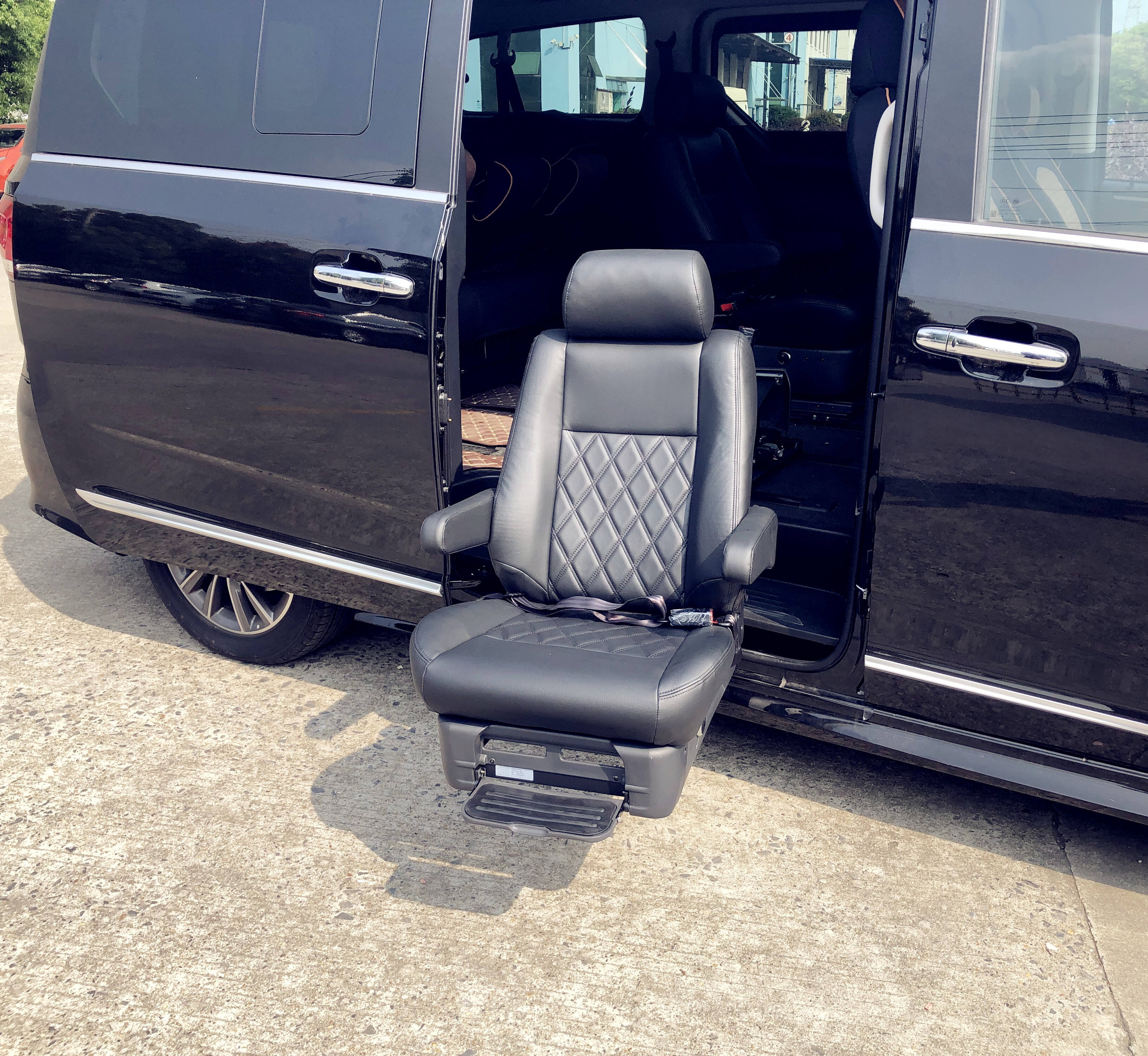
OEM-Grade Safety Assurance: Crash Testing, Compliance, and Structural Integrity of the Car Swivel Seat
FMVSS 207/210 Certification and FEA-Validated Load Path Performance Under 20G Impact
The car swivel seat goes through just as thorough testing as parts made by the original car manufacturers. It passes both FMVSS 207 tests for how well the seat holds together and FMVSS 210 checks for how strong the seat belts stay attached. Engineers ran computer models called finite element analysis (FEA) to see what happens when there's a really hard crash at 20G forces. That kind of force is basically what happens if someone slams into a wall at 35 miles per hour straight on. The results show this seat stays stable even under those extreme conditions.
The seat's reinforced alloy frame spreads out crash forces through those triangular support structures we mentioned earlier, which helps keep those important areas intact where the seat belts attach. When it comes to testing, manufacturers run all sorts of validation procedures. They do dynamic sled tests that simulate those intense 20G deceleration pulses, take detailed 3D scans to measure how much the structure bends at sub-millimeter levels, and perform load tests that go well beyond 10,000 cycles just to be sure. All these checks help maintain good performance no matter how the seat rotates around its full 360 degree range. The design actually directs crash energy away from where people sit through specially designed crumple zones, something that stops those annoying problems folks often see after accidents, like joints coming apart or mounts breaking. Third party laboratories double check everything with instruments right up there with what original equipment manufacturers use, so there's absolutely no need to sacrifice accessibility for safety when these seats are installed.
Table of Contents
- Engineered Accessibility: How the Car Swivel Seat Enables Safe, Independent Transfers
- Smart Customization: Adaptive Adjustability for Diverse Mobility and Cognitive Needs
- Seamless Vehicle Integration: Broad Compatibility and Certified Retrofit Installation
- OEM-Grade Safety Assurance: Crash Testing, Compliance, and Structural Integrity of the Car Swivel Seat