EN
EN

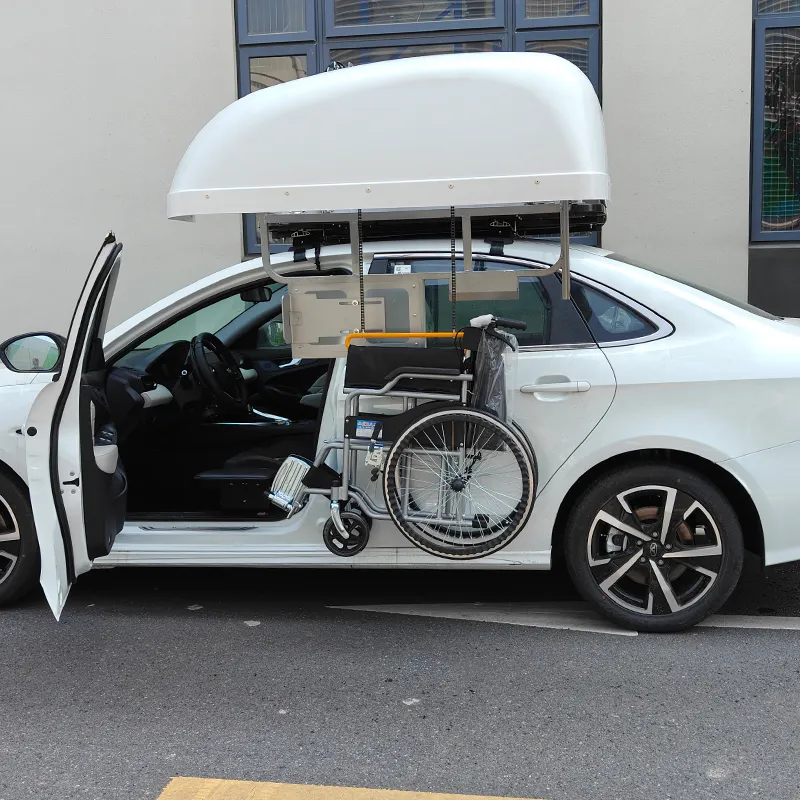
Assess Your Family’s Mobility Requirements
Daily travel patterns, passenger count, and wheelchair user roles (driver vs. passenger)
Before evaluating vehicle specs, map your family’s real-world routines: school drop-offs, therapy appointments, grocery runs, and caregiver commutes. Note how many people travel together—and whether the wheelchair user will drive or ride as a passenger. A family of five with a non-driving wheelchair user needs a spacious, caregiver-friendly layout; a couple where the wheelchair user is the driver requires unobstructed sightlines, accessible hand controls, and a secure docking system that supports full vehicle command. Passenger-only configurations prioritize easy, independent boarding and room for companions. Also consider assistance needs: if transfers require extra space or two-person support, features like a lowered floor and wide ramp become essential—not optional. The right van aligns with how you live, not just technical benchmarks—preventing costly retrofits and daily friction.
Trip frequency, duration, terrain challenges, and home-to-destination accessibility
Look beyond the showroom. Frequent long-distance travel demands comfort-focused engineering: supportive seating, climate-controlled cabin airflow, and fuel-efficient powertrains. Short, local trips may suit simpler conversions—but don’t overlook durability. Terrain matters deeply: gravel driveways, steep hills, or unpaved rural roads call for higher ground clearance and rugged, low-maintenance ramp mechanisms. Smooth suburban streets allow for sleeker, lower-floor designs. Equally critical is end-to-end accessibility. Measure garage door width and height, driveway slope, and curb clearance at home and key destinations—including medical offices, workplaces, and supermarkets. According to the National Mobility Equipment Dealers Association’s 2023 industry survey, nearly 40% of wheelchair van returns stem from dimensional mismatches—especially insufficient ramp deployment space in garages or at storefronts. Confirm the van can fully extend its ramp without obstruction where you actually use it. A vehicle that performs flawlessly on the lot but stalls at your front step undermines independence—not enables it.
Compare Side-Entry vs. Rear-Entry Wheelchair Van Configurations
Choosing between side-entry and rear-entry layouts directly affects usability, parking flexibility, and integration with your home environment. The optimal choice hinges on driving role, typical parking conditions, and residential infrastructure—not just preference.
Curb access, parallel parking, and maneuverability in urban and suburban settings
Side-entry vans excel where sidewalk-level boarding is practical. The ramp deploys toward the curb, letting the rider roll safely onto pedestrian pathways—ideal for dense urban areas with frequent parallel parking. However, they typically require the 8-foot-wide access aisle mandated by ADA-compliant van-accessible parking spaces; standard spots rarely provide enough lateral clearance. In suburban strip malls, space may be adequate—but narrow residential streets or overhead obstructions (like trees or utility poles) can hinder ramp deployment. Rear-entry vans eliminate the need for side clearance entirely: the ramp extends straight back, fitting into any standard parking spot. This makes them especially suited for drivers who regularly park in garages, tight lots, or on-street locations where sidewalk-side access is blocked. The trade-off? In parallel parking, the rear ramp may deploy partially into the traffic lane—requiring situational awareness and, occasionally, a spotter. For passenger-only users, rear-entry preserves conventional front-row seating and driving ergonomics, while keeping the wheelchair user’s entry point separate and unobtrusive.
Garage fit, driveway slope compatibility, and integration with home accessibility features
Rear-entry conversions typically integrate more seamlessly into standard residential garages. Because the ramp stores vertically and the body width remains unchanged, the overall footprint closely matches the original vehicle—enabling fit in most single-car garages without sacrificing interior volume. Side-entry modifications often widen the body, complicating door clearance and limiting usable space inside narrow garages. Driveway slope also plays a decisive role: rear-entry ramps deployed on steep inclines risk creating unsafe ramp angles, while side-entry ramps extended onto sloped curbs can compromise stability during transfer. If your home has a level driveway and covered porch, a rear-entry van can align directly with an existing exterior ramp—supporting a continuous, step-free path indoors. Conversely, if your primary entrance is at the side of the house, a side-entry van may line up precisely with a side-door ramp or patio access. While garage door height is rarely limiting, the lowered floor common in side-entry conversions reduces ground clearance—making steep driveways prone to undercarriage scraping. The best match emerges only after measuring your garage width, door height, and driveway grade, then cross-referencing those dimensions with each van’s certified ramp-deployment specifications.
Prioritize Real-World Accessibility and Seating Flexibility
When evaluating a wheelchair van, the ramp and interior layout must serve your family’s actual daily flow—not theoretical ideals. Entry, exit, and configuration speed determine whether mobility supports independence—or adds friction.
Ramp type (manual vs. powered), width, weight capacity, and deployment reliability
The ramp is your primary interface with the vehicle—and its design must reflect both physical ability and real-world conditions. Width is foundational: a 30-inch ramp accommodates most manual wheelchairs, but 36 inches provides safer clearance for power chairs and allows caregivers to walk alongside during boarding. Weight capacity must exceed the heaviest occupied wheelchair you’ll transport; standard ramps support 800–1,000 pounds, though reinforced options handle heavier models. Deployment reliability separates convenience from compromise. Manual ramps operate without power—offering weather-resilient simplicity and zero electrical dependencies—but demand consistent upper-body strength, which can fatigue caregivers over time. Powered ramps deliver effortless, one-button extension, often with obstacle-sensing technology and smooth, repeatable motion—but rely on motors and batteries that require periodic maintenance to prevent unexpected failures.
| Feature | Manual Ramp | Powered Ramp |
|---|---|---|
| Typical Width | 30″–36″; some extend to 40″ for larger chairs | 30″–36″; often with side rails for safety |
| Weight Capacity | 800–1,000 lbs (standard) | 800–1,000 lbs; reinforced models available |
| Deployment | Manual folding; no power dependency; requires strength | Button-operated; smooth, consistent; motor/battery reliant |
Modular seating: removable/foldable options and secure wheelchair lock-down systems
Flexible seating transforms a wheelchair van from a single-purpose tool into a true family vehicle. Removable second- and third-row seats—latching securely into floor-mounted tracks without tools—let one person reconfigure the cabin in minutes: open a flat floor for the wheelchair user, then reinstall seats for weekend outings or carpools. Fold-down seats, which tuck flush against the sidewalls, preserve cargo volume and are ideal when transporting both a wheelchair and bulky gear like strollers or sports equipment. Equally vital is the securement system. Crash-tested, four-point retractable tie-downs anchor the wheelchair at front and rear points, while automatic docking systems engage with a single motion—locking the chair to a reinforced floor bolt. Always verify compliance with FMVSS 403 and 404 standards and confirm the system’s rated capacity matches your wheelchair’s total loaded weight. Proper securement isn’t just regulatory—it’s the bedrock of occupant safety in every journey.
Plan for Total Cost of Ownership of Your Wheelchair Van
The true investment in a wheelchair van extends well beyond the sticker price. New accessible vehicles range from $40,000 to $80,000; pre-owned models start around $15,000 and top out near $40,000; and aftermarket conversions of existing vans cost $10,000 to $25,000. But these figures represent only the beginning. Specialized components—including ramps, lifts, securement systems, and adaptive driving controls—require expert service, increasing long-term maintenance costs significantly. Over a 10-year ownership span, families should anticipate $15,000–$30,000 in scheduled repairs, battery replacements, ramp motor servicing, and adaptive equipment recalibration. Additional adaptive devices—such as hand controls, pedal extensions, or voice-activated interfaces—add $2,000–$8,000 depending on complexity. Fortunately, financial support exists: state Medicaid Home and Community-Based Services (HCBS) waivers, VA Adaptive Housing Grants, and nonprofit programs like United Spinal Association’s Mobility Fund offer meaningful assistance. Many reputable dealers also provide transparent financing plans with fixed rates and deferred payment options for qualified buyers. By accounting for both upfront and lifetime expenses—and proactively exploring funding avenues—families secure not just a vehicle, but sustainable, dignified mobility for years to come.
FAQ
What factors should I consider when choosing a wheelchair-accessible van?
Consider daily travel patterns, wheelchair user roles (driver vs. passenger), trip frequency and duration, terrain challenges, and home-to-destination accessibility elements. Ensure the features align with your family's real-world needs.
What are the differences between side-entry and rear-entry wheelchair vans?
Side-entry vans allow easier curb access and sidewalk boarding, fitting ADA-compliant parking spaces but demand wider clearance. Rear-entry vans are better suited for garages, tight spaces, and areas with restricted side clearance but may deploy ramps into traffic lanes during parallel parking.
How can I measure my home's compatibility with a wheelchair van?
Measure garage width, door height, driveway slope, and curb/step clearance. Confirm these dimensions align with the van's ramp-deployment specifications.
Are powered ramps better than manual ramps?
Powered ramps offer one-button ease and automated motion but rely on maintenance for battery and motor functioning. Manual ramps require caregiver strength but avoid power dependency and remain weather-resilient.
What funding resources are available for wheelchair van purchases?
Support includes state Medicaid HCBS waivers, VA Adaptive Housing Grants, and nonprofit assistance like the Mobility Fund. Many dealers also offer financing plans tailored for accessibility.
Table of Contents
- Assess Your Family’s Mobility Requirements
- Compare Side-Entry vs. Rear-Entry Wheelchair Van Configurations
- Prioritize Real-World Accessibility and Seating Flexibility
- Plan for Total Cost of Ownership of Your Wheelchair Van
-
FAQ
- What factors should I consider when choosing a wheelchair-accessible van?
- What are the differences between side-entry and rear-entry wheelchair vans?
- How can I measure my home's compatibility with a wheelchair van?
- Are powered ramps better than manual ramps?
- What funding resources are available for wheelchair van purchases?