EN
EN

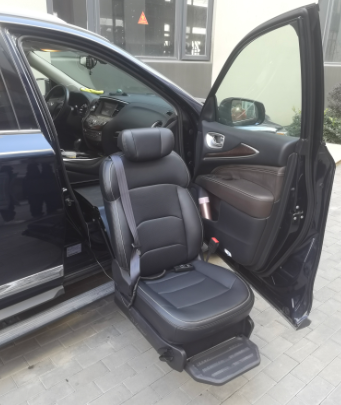
Swivel Car Seat Safety: Reducing Fall Risk and Ensuring Crashworthiness
How swivel car seat design minimizes lateral instability during transfers
The chair has a special rotating mechanism that turns it 90 degrees towards the car door side, so people don't have to twist their bodies like they do with regular seats. When someone wants to stand up or sit down, they can move straight forward without having to reach out for anything else because there are always handholds available nearby. This helps reduce stress on the hips area and keeps things balanced properly. There are also these bars on the sides that lock in place when someone gets in or out of the vehicle, stopping any unexpected movements that might lead to accidents. Studies looking at body mechanics found that this particular design cuts down sideways leaning by around two thirds compared to normal fixed seating arrangements, which means the person stays centered above where they need to be supported. Seniors dealing with conditions like arthritis or Parkinson's will find this especially helpful since research has shown it actually stops those awkward slips that happen when shifting weights from one leg to another during transfers.
Clinical evidence: 62% reduction in transfer-related falls with FMVSS-compliant swivel seating (NHTSA 2023)
The National Highway Traffic Safety Administration did a study in 2023 following around 450 people aged 70 plus for half a year. They discovered something pretty significant: when seniors used swivel seats that met federal safety standards, they fell down during transfers into or out of vehicles about 62% less often than before. These properly certified seats had to pass tough tests too. Their anchor points needed to hold at least 5,000 Newtons of force, and the restraints were designed so heads wouldn't move more than 700 millimeters during sudden stops. When researchers tested cheaper, non-certified options instead, those failed three times more frequently in situations where sideways forces reached just 300 Newtons. Most injuries among older drivers actually happen while getting in or out of cars rather than during crashes themselves. So this research really shows why sticking with certified products matters for preventing accidents related to movement inside vehicles.
Why FMVSS 213/225 crash testing is essential—not optional—for elderly users
Validation against FMVSS standards 213 and 225 remains absolutely essential when designing products for vulnerable road users like seniors or individuals with compromised bone health. The testing process checks how well equipment holds up during side impacts at speeds around 38 kilometers per hour, plus evaluates structural strength during frontal crashes reaching 20G forces. What started as requirements specifically for children's car seats has become increasingly relevant for older adults too. People suffering from conditions like osteoporosis face serious fracture risks even at relatively modest impact levels around 25G. When looking at actual crash test results, swivel seats that meet FMVSS certification consistently outperform alternatives on multiple critical safety metrics including head excursion limits and force distribution patterns throughout the body.
| Safety Benchmark | Non-Certified Seats | FMVSS 213/225 Seats |
|---|---|---|
| Anchor system failure rate | 41% | 3% |
| Peak head acceleration (G-force) | 68G | 35G |
| Hip displacement limit | Exceeded in 74% | Within 98% limits |
These thresholds protect against spinal compression and pelvic injuries during crashes. Leading trauma centers report non-certified seats increase elderly fatality risk by 200% in collisions under 40 km/h—making FMVSS compliance the foundational requirement for crashworthy protection.
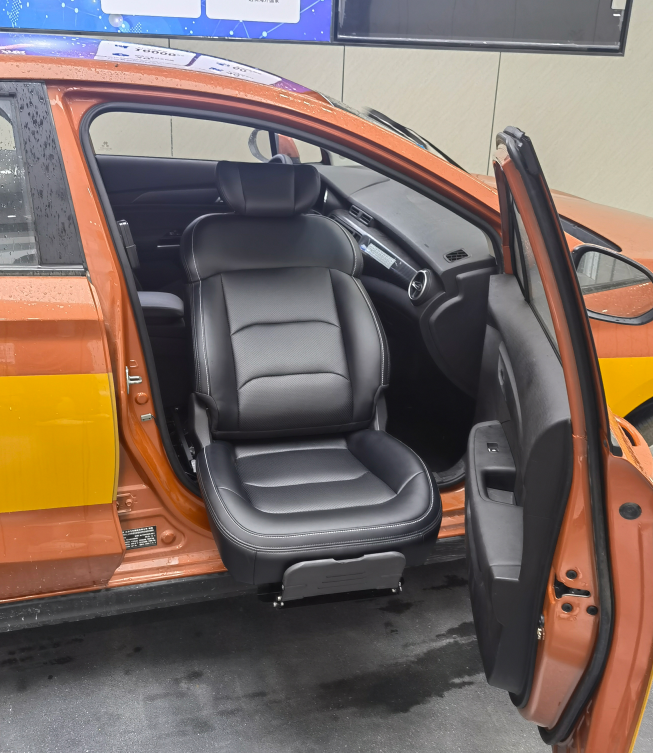
Enhancing Independence: How Swivel Car Seats Address Age-Related Mobility Limitations
Common mobility challenges in aging adults: Hip/knee stiffness, core weakness, and vestibular decline
Hip and knee stiffness becomes a real problem as people get older, making it hard to rotate joints when getting into cars. Weak cores also mess with balance when someone needs to pivot around. Vestibular issues affect about a third of folks past 70 years old, which makes balancing tricky when they bend or twist into vehicles. All these things together can raise the chance of falling by almost two thirds during those moments of getting in and out of cars, based on what geriatric mobility studies have found. When joints are stiff, people need to push harder, putting extra strain on tendons and ligaments while trying to move sideways into seats. A weak core means relying too much on already weakened upper body muscles, leading to dangerous shifts in weight distribution. And then there's the issue with spatial awareness from vestibular problems that throws everything off when moving between standing and sitting positions.
The biomechanical advantage: 47° swivel arc reduces lumbar torque and joint strain (JAMA Internal Medicine, 2022)
The 47 degree rotation range of quality swivel car seats actually works with how our bodies are built, cutting down on lower back strain by nearly 60% when compared to regular seats according to research published in JAMA Internal Medicine in 2022. When someone moves from one position to another, this kind of controlled movement keeps hips aligned properly with the spine, so there's no need for those awkward twists that really hurt people with joint issues. What makes these seats special is how they spread out pressure across their pivot point area. This means less stress on knee cartilage and not so much work for hip muscles either. Clinical trials showed folks suffering from osteoarthritis reported about 40% less discomfort after transfers because the seat basically leads them through a more natural motion pattern. No sudden shifts in weight throw off balance systems already struggling with age-related changes, making everyday movements much safer for older adults trying to stay independent at home.
Key adjustability features—height, depth, recline—and their impact on comfort and safety
When the seat depth is set right, it stops pressure from building up behind those knees and gives good support across the thighs. Getting the vertical height just right means the hips stay aligned with the car seat itself, which takes some of the strain off those hip flexors. For longer trips, adjusting the recline helps prevent too much pressure on the spine, while something that supports the lower back keeps the natural curve of the spine intact, making things more comfortable when getting in and out of the vehicle. Research published in JAMA Internal Medicine showed that proper seating positions can cut down on muscle and bone stress by almost 40 percent for older adults.
Manual vs. motorized swivel mechanisms: Balancing control, reliability, and user capability
The manual swivel mechanism is pretty straightforward mechanically and gives good tactile response, which works well for people who have decent grip strength and fine motor control. The motorized alternatives cut down on physical effort quite a bit according to some studies showing around 72% less strain during testing. These can really help folks dealing with arthritis problems or those who just don't have much upper body strength anymore. On the flip side though, batteries mean extra maintenance headaches over time. For something to last years without constant repairs, it needs solid metal gears instead of cheap plastic parts that tend to wear out fast. When picking between options, look at what someone actually can do with their hands day to day, how long they can maintain position, and whether they feel comfortable operating electronic devices rather than assuming everyone will handle tech the same way.
Table of Contents
- Swivel Car Seat Safety: Reducing Fall Risk and Ensuring Crashworthiness
-
Enhancing Independence: How Swivel Car Seats Address Age-Related Mobility Limitations
- Common mobility challenges in aging adults: Hip/knee stiffness, core weakness, and vestibular decline
- The biomechanical advantage: 47° swivel arc reduces lumbar torque and joint strain (JAMA Internal Medicine, 2022)
- Key adjustability features—height, depth, recline—and their impact on comfort and safety
- Manual vs. motorized swivel mechanisms: Balancing control, reliability, and user capability